Affiliate marketing programs allow individuals to earn commissions by promoting products or services online. They connect marketers with businesses seeking to expand their reach.
Affiliate marketing has become a powerful tool for both marketers and businesses. It provides a win-win situation where marketers earn commissions while businesses gain more visibility and sales. Participants join affiliate networks or programs, select products to promote, and earn a commission for each sale generated through their unique referral link.
This model is cost-effective for businesses as they only pay for actual sales. For marketers, it offers a flexible income stream. The key to success lies in choosing the right products and effectively reaching the target audience.
:max_bytes(150000):strip_icc()/affiliate-marketing-6a9d278b2e91467494d7c9168e17bab5.jpg)
Credit: www.investopedia.com
Introduction To Affiliate Marketing
Affiliate marketing is a popular way to earn money online. It’s simple and effective. In this section, we will introduce you to affiliate marketing.
What Is Affiliate Marketing?
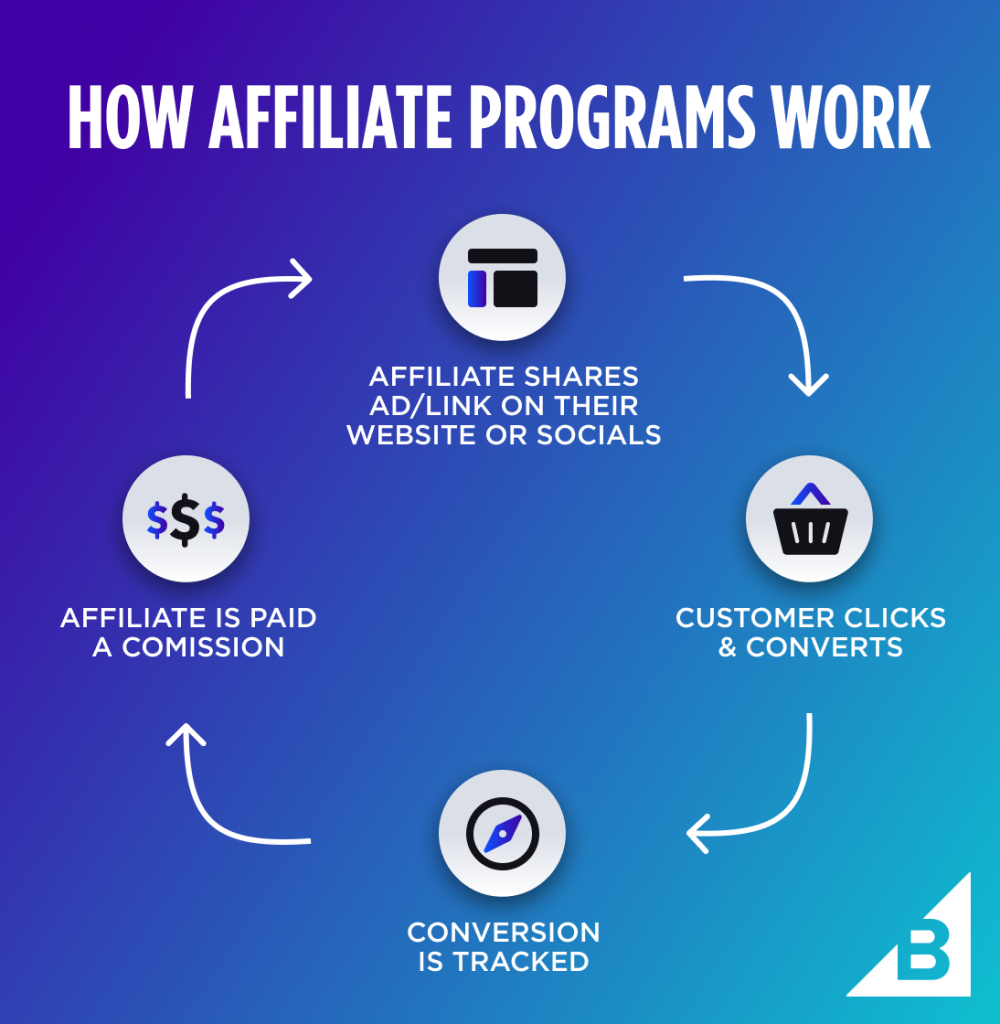
Affiliate marketing is a performance-based marketing strategy. You earn a commission by promoting products or services. Here’s how it works:
- Join an Affiliate Program: Sign up with a company or network.
- Get a Unique Link: Receive a special tracking link.
- Promote the Product: Share the link on your platforms.
- Earn Commissions: Get paid for every sale made through your link.
Why Choose Affiliate Marketing?
There are many reasons to choose affiliate marketing. Here are some key benefits:
| Benefit | Description |
|---|---|
| Low Start-Up Cost | You don’t need much money to start. |
| Passive Income | Earn money even when you sleep. |
| Flexibility | Work from anywhere, anytime. |
| Variety of Choices | Promote products in any niche you like. |
Affiliate marketing offers freedom and financial opportunities. It’s ideal for beginners and experts alike. Start today and see the benefits for yourself.
Finding The Right Affiliate Program
Finding the right affiliate program can be challenging. The perfect program can boost your earnings. This section will guide you through researching and evaluating programs.
Researching Programs
Start by researching affiliate programs in your niche. Use search engines, forums, and social media. Look for reputable programs with positive reviews. You can ask other affiliates for recommendations.
Here are some steps to guide your research:
- Identify popular products in your niche.
- Check if these products have affiliate programs.
- Visit affiliate networks like ShareASale or CJ Affiliate.
- Read reviews and testimonials from other affiliates.
| Step | Action |
|---|---|
| 1 | Identify popular products |
| 2 | Check for affiliate programs |
| 3 | Visit affiliate networks |
| 4 | Read reviews |
Evaluating Commission Structures
Evaluating the commission structures of affiliate programs is crucial. Look at the percentage they offer per sale. Some programs offer flat rates, while others offer percentage-based commissions.
Consider the following factors:
- Percentage of commission per sale
- Flat rate versus percentage-based commissions
- Cookie duration (how long the referral lasts)
- Payout methods and thresholds
Here is a simple comparison:
| Program | Commission Type | Percentage/Rate | Cookie Duration |
|---|---|---|---|
| Program A | Percentage | 10% | 30 days |
| Program B | Flat Rate | $50 per sale | 45 days |
Choosing the right affiliate program is essential for success. Take your time to research and evaluate. This will ensure you find the best fit for your efforts.
Building Your Platform
Building your platform is essential for success in affiliate marketing programs. A strong platform helps you reach a wider audience and boost your earnings. Below are key steps to build an effective platform.
Creating A Website
Your website is your primary tool for affiliate marketing. It serves as your digital home where you engage with your audience and promote products.
Follow these steps to create a website:
- Choose a domain name that reflects your niche.
- Use a reliable hosting service for faster loading speeds.
- Install a user-friendly CMS like WordPress.
- Select a responsive and attractive theme.
- Optimize your website for SEO using plugins.
A well-designed website builds credibility and attracts more visitors. Ensure you have a clear call-to-action (CTA) on each page.
Leveraging Social Media
Social media platforms help you reach a broader audience. They are essential for promoting your affiliate products and engaging with potential customers.
Here are some tips for leveraging social media effectively:
- Choose platforms where your target audience is active.
- Create and share valuable content regularly.
- Engage with your followers by responding to comments.
- Use hashtags to increase the visibility of your posts.
- Run social media ads to reach a larger audience.
Consistency is key in social media marketing. Post regularly and keep your audience engaged. Use analytics tools to track your performance and adjust your strategy accordingly.
| Platform | Best Content Type | Frequency |
|---|---|---|
| Articles, Videos, Images | Daily | |
| Images, Stories, Reels | Daily | |
| Short Text, Links, Images | Several times a day |
Building your platform is a continuous process. Keep learning and adapting to stay ahead in affiliate marketing.
Content Strategies For Affiliates
Affiliate marketing programs thrive on engaging content. Creating valuable, engaging content helps attract and retain visitors. This section explores two effective content strategies for affiliates.
Writing Product Reviews
Product reviews are crucial for affiliate marketing success. A well-crafted review can convert visitors into buyers. Here are some tips for writing effective product reviews:
- Be honest: Share both pros and cons.
- Use the product: Personal experience builds trust.
- Include images: Visuals make your review engaging.
- Provide details: Explain features and benefits clearly.
Consider the following table for a sample product review structure:
| Section | Content |
|---|---|
| Introduction | Brief overview of the product |
| Features | List and explain key features |
| Pros and Cons | Highlight strengths and weaknesses |
| Conclusion | Summarize and give a recommendation |
Creating Engaging Videos
Videos captivate audiences and boost engagement. Creating engaging videos can elevate your affiliate marketing efforts. Here are some tips:
- Plan your content: Outline your video script.
- Keep it short: Aim for 3-5 minutes.
- Use visuals: Include images and graphics.
- Be clear: Speak clearly and concisely.
- Call to action: Encourage viewers to click your affiliate link.
Remember, quality videos engage more viewers and increase conversions. Combine these strategies to enhance your affiliate marketing success.
Driving Traffic To Your Links
Driving traffic to your affiliate links is crucial for success. Without traffic, your links won’t generate sales. Let’s explore some effective ways to attract visitors to your links.
Seo Best Practices
Search Engine Optimization (SEO) helps your content rank higher on search engines. By optimizing your content, you can drive organic traffic to your affiliate links.
- Keyword Research: Use tools like Google Keyword Planner to find relevant keywords.
- Quality Content: Write valuable and informative content that answers users’ questions.
- On-Page SEO: Optimize titles, meta descriptions, and headers with keywords.
- Internal Linking: Link to other relevant pages on your site to keep visitors engaged.
- Mobile Optimization: Ensure your site is mobile-friendly for better user experience.
Paid Advertising Options
Paid ads can bring quick traffic to your affiliate links. You can use different platforms for paid advertising.
| Platform | Benefits |
|---|---|
| Google Ads | Target specific keywords and appear in search results. |
| Facebook Ads | Reach a wide audience based on interests and behaviors. |
| Instagram Ads | Visually appealing ads for a younger audience. |
| Pinterest Ads | Great for promoting visual content and products. |
Consider your audience when choosing a platform. Each platform has its unique advantages.

Credit: affiliatewp.com
Optimizing Conversion Rates
Boosting conversion rates is essential in affiliate marketing. Small tweaks can lead to significant gains. Let’s explore two main strategies: A/B testing and effective call-to-actions.
A/b Testing Techniques
A/B testing compares two versions of a webpage. This helps determine which performs better. Here are some key elements to test:
- Headlines: Try different headlines to see which grabs attention.
- Images: Test various images to find the most engaging.
- Button Colors: Different colors can affect click rates.
- Text Length: Shorter text might be better. Test to find out.
Use tools like Google Optimize or Optimizely for A/B testing. Track results carefully. Make decisions based on data.
Effective Call-to-actions
A strong call-to-action (CTA) is vital. It encourages users to take the next step. Here are some tips for creating effective CTAs:
- Be Clear: Use simple words. Tell users exactly what to do.
- Create Urgency: Words like “now” or “today” can prompt action.
- Use Action Words: Start with verbs like “buy”, “download”, or “subscribe”.
- Make it Stand Out: Use contrasting colors. Ensure it’s easy to spot.
Here’s a table summarizing effective CTA tips:
| Tip | Description |
|---|---|
| Be Clear | Use simple and direct language. |
| Create Urgency | Encourage immediate action with urgent words. |
| Use Action Words | Start CTAs with strong verbs. |
| Make it Stand Out | Use colors and design to highlight the CTA. |
Optimizing conversion rates involves testing and refining strategies. Focus on clarity and urgency in CTAs. Use data from A/B testing to guide decisions. This approach ensures continuous improvement.
Tracking And Analyzing Performance
Tracking and analyzing performance is crucial in affiliate marketing. This helps you understand what works and what doesn’t. By using data, you can fine-tune your strategies for better results. Let’s explore how to use analytics tools and adjust strategies based on data.
Using Analytics Tools
Analytics tools are essential for tracking performance. Tools like Google Analytics and SEMrush provide insights into your traffic and conversions. These tools help you see which campaigns are successful.
Google Analytics can show you the sources of your traffic. You can see if visitors come from social media, search engines, or direct links. This helps identify which channels are most effective.
Using Heatmaps can show where users click on your site. This data helps you understand user behavior. You can make changes to improve the user experience.
| Tool | Function |
|---|---|
| Google Analytics | Tracks traffic sources and user behavior |
| SEMrush | Analyzes SEO and PPC performance |
| Heatmaps | Shows where users click on your site |
Adjusting Strategies Based On Data
Data helps you adjust your strategies for better results. If a campaign isn’t working, you can change it. Look at your data to see what needs improvement.
For instance, if your click-through rate (CTR) is low, you may need to change your ad copy. Use A/B testing to compare different versions of your ads. This helps you find the most effective one.
Tracking conversion rates is also important. If your conversion rate is low, consider optimizing your landing page. Ensure it is user-friendly and loads quickly.
- Review your analytics regularly.
- Identify areas needing improvement.
- Make data-driven changes.
- Monitor the impact of those changes.
Using data helps you improve your affiliate marketing efforts. Regular analysis and adjustments lead to better performance and higher earnings.

Credit: www.advertisepurple.com
Scaling Your Affiliate Business
Scaling your affiliate business means boosting your revenue and impact. It involves growing your reach, optimizing processes, and exploring new markets. This guide will show you how to automate tasks and tap into new niches.
Automating Processes
Automation saves time and reduces manual work. Use tools to streamline your operations. Consider these key areas:
- Email Marketing: Use platforms like Mailchimp or ConvertKit.
- Social Media Scheduling: Tools like Hootsuite or Buffer can help.
- SEO and Analytics: Google Analytics and Ahrefs are great options.
By automating these tasks, you focus on strategy and growth. Invest in the right tools to make life easier.
Expanding To New Niches
Diversify your portfolio by exploring new niches. This reduces risk and opens new revenue streams. Start by researching niche markets:
- Identify gaps in your current market.
- Analyze competitor strategies.
- Evaluate potential profitability.
Once you identify a niche, create tailored content to attract that audience. Use keyword research to guide your content strategy. New niches mean new opportunities for growth.
Scaling your affiliate business requires effort but brings significant rewards. Focus on automating processes and finding new niches to thrive.
Common Challenges And Solutions
Affiliate marketing programs are a great way to earn money online. Yet, they come with their own set of challenges. Understanding these challenges and finding effective solutions can help you succeed. Below are some common challenges and how to overcome them.
Overcoming Low Traffic
Low traffic is a major issue in affiliate marketing. Without visitors, you can’t make sales. Here are some ways to increase traffic:
- SEO Optimization: Use keywords that your audience searches for. Optimize your meta tags, headers, and content.
- Content Marketing: Create high-quality, engaging content. Share it on social media and other platforms.
- Guest Blogging: Write guest posts on popular blogs. This brings new visitors to your site.
- Email Marketing: Build an email list. Send newsletters with valuable information and product links.
Dealing With Competition
The affiliate marketing space is very competitive. Many people promote the same products. Here’s how to stand out:
- Find a Niche: Focus on a specific niche. This reduces competition and attracts targeted traffic.
- Build Trust: Be honest and transparent with your audience. Trust leads to higher conversion rates.
- Offer Value: Provide useful information and solutions. Help your audience make informed decisions.
- Unique Content: Create unique, high-quality content. This sets you apart from competitors.
Addressing these challenges effectively can improve your affiliate marketing success. Focus on these strategies to boost your traffic and outshine your competition.
Frequently Asked Questions
What Is Affiliate Marketing?
Affiliate marketing is a performance-based strategy. Businesses reward affiliates for driving traffic or sales through their marketing efforts.
How Do Affiliate Programs Work?
Affiliate programs involve promoting products using unique links. Affiliates earn commissions when users make purchases through these links.
Are Affiliate Programs Free To Join?
Most affiliate programs are free to join. You simply sign up, promote products, and earn commissions on sales.
Can Beginners Succeed In Affiliate Marketing?
Yes, beginners can succeed. Start by choosing a niche, joining programs, and creating valuable content to attract traffic.
Conclusion
Affiliate marketing programs offer a lucrative way to earn passive income. They provide flexibility and scalability for any niche. Start small, scale up, and see the benefits. Choose the right program, and success will follow. Embrace this opportunity to grow your online business effortlessly.
Happy marketing!