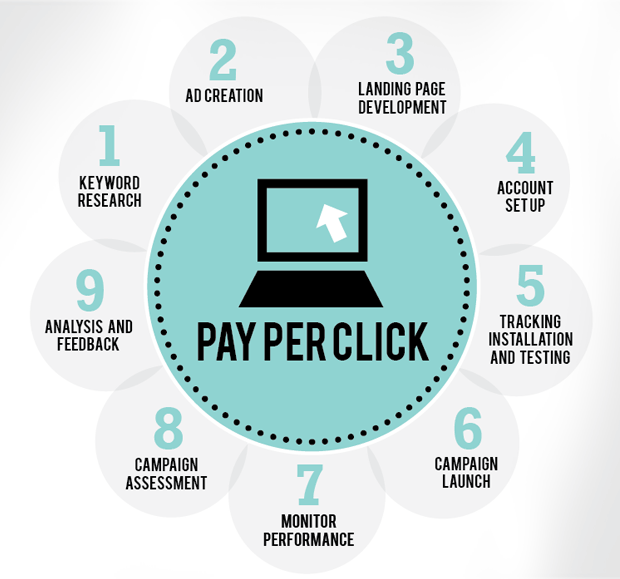
To optimize PPC advertising, target the right keywords and create compelling ad copy. Regularly monitor and adjust your campaigns.
PPC (Pay-Per-Click) advertising allows businesses to place ads on search engines and other platforms. This method drives targeted traffic to your website, potentially increasing conversions. Start by researching relevant keywords that match user intent. Craft engaging ad copy that captures attention and encourages clicks.
Regularly analyze campaign performance metrics like click-through rates and conversion rates. Adjust your bids and strategies based on this data. A well-managed PPC campaign can significantly boost your online presence and ROI. Effective PPC advertising requires ongoing optimization and a focus on delivering value to your target audience.
Introduction To Ppc Advertising
PPC advertising is a way to get more visitors to your website. Advertisers pay a fee each time someone clicks their ad. It can drive quick results and boost sales.
PPC stands for Pay-Per-Click. It’s a model where you only pay when someone clicks your ad. This makes it budget-friendly and efficient.
Benefits Of Ppc
- Quick Results: Get immediate traffic to your website.
- Targeted Audience: Reach people interested in your product.
- Control Costs: Set a budget and pay only when someone clicks.
- Measurable: Track performance with clear metrics and data.
- Brand Visibility: Increase your brand’s presence online.
Common Ppc Platforms
| Platform | Description |
|---|---|
| Google Ads | Most popular platform, extensive reach and tools. |
| Bing Ads | Good for reaching a different audience than Google. |
| Facebook Ads | Great for targeting based on interests and demographics. |
| Instagram Ads | Visual platform, ideal for brand awareness and engagement. |
| LinkedIn Ads | Best for B2B marketing and professional services. |
Setting Goals
Setting goals is crucial for any successful PPC advertising campaign. Clear goals provide direction and purpose. They help measure the effectiveness of your efforts. Without goals, it’s hard to know if your campaign is working.
Defining Objectives
First, define your objectives. What do you want to achieve with your PPC ads? Objectives could include increasing website traffic, generating leads, or boosting sales. Clear objectives guide your strategy and focus your efforts.
Use the SMART criteria to set objectives:
- Specific: State exactly what you aim to achieve.
- Measurable: Ensure your goal is quantifiable.
- Achievable: Set realistic goals within your capacity.
- Relevant: Align your goal with business objectives.
- Time-bound: Set a deadline for achieving the goal.
Measuring Success
Once objectives are defined, measure success to evaluate performance. Use key performance indicators (KPIs) to track progress. Common KPIs for PPC include:
| Metric | Description |
|---|---|
| Click-Through Rate (CTR) | Ratio of clicks to impressions. |
| Conversion Rate | Percentage of clicks that result in conversions. |
| Cost Per Click (CPC) | Average cost of each click. |
| Return on Ad Spend (ROAS) | Revenue generated for every dollar spent. |
Regularly review these KPIs to ensure your campaign is on track. Adjust your strategy if necessary to improve performance and achieve your goals.
Keyword Research
Effective PPC advertising starts with thorough keyword research. Choosing the right keywords can make or break your campaign. This section will guide you through finding relevant keywords and utilizing keyword tools to optimize your PPC efforts.
Finding Relevant Keywords
Start by brainstorming a list of words related to your business. Think about what your customers might search for. Use specific words that describe your products or services. This helps narrow down your keyword list.
Next, consider the search intent behind these words. Are users looking to buy something or just seeking information? Understanding intent helps target the right audience. Group your keywords based on intent for better ad targeting.
Using Keyword Tools
Keyword tools can simplify your research. Many tools offer insights into keyword volume and competition. These metrics help prioritize which keywords to target. Here are some popular keyword tools:
- Google Keyword Planner: Free tool with detailed keyword data.
- SEMrush: Provides competitive analysis and keyword suggestions.
- Ahrefs: Offers comprehensive keyword research and backlink analysis.
Using these tools, you can uncover keywords you might not have thought of. Also, look at long-tail keywords. These are longer phrases with lower competition. They often convert better because they target specific searches.
Here is a simple comparison table of the tools:
| Tool | Free Version | Keyword Data | Competitive Analysis |
|---|---|---|---|
| Google Keyword Planner | Yes | Excellent | No |
| SEMrush | No | Very Good | Yes |
| Ahrefs | No | Excellent | Yes |
Incorporate these tools into your strategy for better results. Regularly update your keyword list based on performance. This ensures your PPC ads remain effective over time.
Credit: sachsmarketinggroup.com
Crafting Effective Ads
Effective PPC ads need both strong copy and visuals. They attract clicks and conversions. Crafting these elements requires skill and strategy. Let’s dive into the details.
Writing Compelling Copy
Writing compelling ad copy is crucial. Use action words to drive engagement. Focus on benefits, not features. For example, say “Save time with our tool” instead of “Our tool has time-saving features.”
- Keep sentences short and clear.
- Use numbers to grab attention.
- Include a strong call-to-action (CTA).
Break up text with bullet points. This improves readability.
| Feature | Benefit |
|---|---|
| 24/7 Support | Never worry about issues |
| Free Trial | Test before you buy |
Designing Eye-catching Visuals
Visuals are as important as copy. They draw the eye. Use bright colors and clear images. Avoid clutter. Ensure your brand logo is visible.
- Choose high-quality images.
- Use contrasting colors for text and background.
- Keep the design simple and clean.
Include your unique selling proposition (USP) in the visual. This makes your ad stand out.
Optimizing Landing Pages
To make the most of your PPC advertising, it is crucial to optimize your landing pages. An optimized landing page can significantly improve conversions. It ensures users find what they seek quickly and easily. Below are key strategies to achieve this.
Ensuring Relevance
Your landing page must match the ad’s promise. The headline should reflect the ad’s message. This creates a consistent user experience. Users must feel they are on the right page. If they clicked on an ad for a discount, the landing page should immediately show that discount.
Include keywords in the landing page’s content. This improves your page’s relevance and SEO. Make sure images and videos are related to the ad content. Avoid misleading users with unrelated media.
Improving User Experience
A good user experience is vital for a high-converting landing page. The page should load quickly. Users do not like to wait. Use a clean and simple design. Remove clutter and distractions.
Navigation should be easy. Users must find what they need without scrolling too much. Use clear and bold call-to-action buttons. These buttons should stand out and guide users to the next step.
Include trust signals like reviews and testimonials. This builds user confidence. Ensure the landing page is mobile-friendly. Many users access pages via their phones. A responsive design improves their experience.
| Aspect | Tip |
|---|---|
| Page Speed | Optimize images and use fast servers. |
| Design | Keep it clean and simple. |
| Navigation | Use clear menus and CTAs. |
| Trust Signals | Include reviews and testimonials. |
| Mobile-Friendly | Ensure responsive design. |
Credit: sachsmarketinggroup.com
Budget Management
Effective budget management is crucial for successful PPC campaigns. Proper allocation ensures maximum ROI. This section will cover essential tips for managing your PPC budget efficiently.
Setting Daily Limits
Setting daily limits is vital for controlling your PPC spend. It helps you avoid overspending. Start by determining your total monthly budget. Divide it by 30 to get your daily limit. This ensures you stay within your budget. Adjust the daily limit based on performance. Increase it for high-performing campaigns. Decrease it for underperforming ones. This way, you optimize your spending.
Allocating Funds Wisely
Allocating funds wisely is key to maximizing your ROI. Focus on high-performing keywords. Use data from past campaigns to identify them. Allocate more budget to these keywords. Reduce spend on low-performing keywords. This strategy ensures your budget is used efficiently.
| Campaign Type | Suggested Budget Allocation |
|---|---|
| Brand Awareness | 20% |
| Product Launch | 30% |
| Seasonal Promotions | 25% |
| Retargeting | 25% |
Using a balanced allocation strategy is essential. It ensures all important areas are covered. Monitor the performance regularly. Adjust the budget as needed. This dynamic approach helps in achieving optimal results.
Tracking And Analytics
Tracking and analytics are crucial for successful PPC advertising campaigns. They help you understand your ads’ performance and optimize them for better results. By using tracking tools and analyzing campaign performance, you can make informed decisions and maximize your ROI.
Using Tracking Tools
Tracking tools are essential for measuring the effectiveness of your PPC campaigns. They provide valuable data on clicks, impressions, and conversions. Some popular tracking tools include:
- Google Analytics: Tracks website traffic and user behavior.
- Google Ads Conversion Tracking: Measures conversions from your ads.
- Facebook Pixel: Tracks conversions and user interactions on Facebook ads.
- Hotjar: Provides heatmaps and session recordings for user behavior analysis.
Implementing these tools helps you gather accurate data. This data is vital for optimizing your PPC campaigns.
Analyzing Campaign Performance
Once you have collected data, it’s time to analyze your campaign performance. Focus on key metrics like:
| Metric | Description |
|---|---|
| Click-Through Rate (CTR): | The percentage of clicks your ad receives relative to its impressions. |
| Conversion Rate: | The percentage of users who complete a desired action after clicking your ad. |
| Cost Per Click (CPC): | The average cost you pay for each click on your ad. |
| Return on Ad Spend (ROAS): | The revenue generated for every dollar spent on your campaign. |
Regularly analyzing these metrics helps you identify areas for improvement. Adjust your bids, ad copy, and targeting based on the insights you gather. This continuous optimization process ensures your PPC campaigns are efficient and cost-effective.
A/b Testing
A/B Testing is crucial for optimizing PPC advertising campaigns. It helps determine which ads perform best. By comparing two versions, you can identify the most effective elements. This process boosts your ROI and ad performance.
Testing Ad Variations
Testing different ad variations involves changing one element at a time. You can test headlines, descriptions, images, or calls to action. Create two versions of an ad with one distinct difference. This isolates the variable and clarifies its impact.
| Ad Variation | Element Changed |
|---|---|
| Ad A | Headline |
| Ad B | Call to Action |
Interpreting Results
Interpreting results involves analyzing the performance data. Look at metrics like click-through rates and conversions. Higher numbers indicate better-performing ads. Use these insights to refine your PPC strategy.
- Compare the click-through rates (CTR) of both ads.
- Examine the conversion rates for each version.
- Identify which ad achieves higher engagement.
Implement changes based on the winning ad. Repeat the process for continuous improvement.
Advanced Strategies
Elevate your PPC campaigns by diving into advanced strategies. These tactics can significantly improve your ad performance. Focus on specific audience segments and utilize smart targeting techniques. Let’s explore some advanced strategies in detail.
Retargeting Techniques
Retargeting helps bring back potential customers who visited your site. It uses cookies to track visitors and shows your ads to them. This increases the chances of conversion.
Here are some effective retargeting techniques:
- Site Visitors Retargeting: Target users who visited your website but didn’t convert.
- Abandoned Cart Retargeting: Focus on users who added items to their cart but didn’t complete the purchase.
- Page-Specific Retargeting: Show ads based on specific pages the user visited.
Utilizing Lookalike Audiences
Lookalike Audiences help you find new customers who resemble your existing ones. This technique leverages data from your current customers to find similar prospects.
Steps to create effective lookalike audiences:
- Data Collection: Gather data from your best customers.
- Create Custom Audience: Use this data to create a custom audience in your ad platform.
- Generate Lookalike Audience: Utilize the custom audience to find similar users.
This method expands your reach to potential customers likely to convert.
| Strategy | Description |
|---|---|
| Retargeting | Shows ads to users who visited your site. |
| Lookalike Audiences | Finds new users similar to your existing customers. |

Credit: vitaldesign.com
Common Mistakes To Avoid
PPC advertising can drive traffic to your site quickly. But many advertisers make common mistakes. These errors can cost you money and lower your campaign’s success. Below, we discuss two major pitfalls: Ignoring Negative Keywords and Overlooking Mobile Users.
Ignoring Negative Keywords
Negative keywords prevent your ads from showing up in irrelevant searches. Ignoring them can waste your budget. For example, if you sell high-end watches, you don’t want searches for “cheap watches” to trigger your ads.
Here’s a table showing the impact of negative keywords:
| Without Negative Keywords | With Negative Keywords |
|---|---|
| High bounce rates | Lower bounce rates |
| Wasted ad spend | Optimized ad spend |
| Lower ROI | Higher ROI |
Use tools like Google Keyword Planner to find negative keywords. Regularly update your list to stay relevant.
Overlooking Mobile Users
Many users browse the internet on mobile devices. Ignoring mobile users can limit your reach. Make sure your ads are mobile-friendly.
Here are some tips to optimize for mobile users:
- Use responsive design for landing pages.
- Keep ad copy short and engaging.
- Ensure fast loading times.
Mobile optimization improves user experience and boosts conversions. Remember, a seamless mobile experience can set you apart from competitors.
Frequently Asked Questions
What Is Ppc Advertising?
PPC stands for Pay-Per-Click. It’s a model where advertisers pay a fee each time their ad is clicked.
How Does Ppc Advertising Work?
Advertisers bid on keywords. When users search those keywords, the ads appear. Advertisers pay when users click.
Why Is Keyword Research Important?
Keyword research identifies terms your audience searches. It helps target ads effectively, maximizing clicks and ROI.
How Can I Improve My Ppc Ad Performance?
Optimize ad copy, use negative keywords, and regularly monitor campaigns. Adjust bids and targeting for better results.
Conclusion
Mastering PPC advertising can transform your business. Apply these tips to optimize your campaigns and boost ROI. Regularly review and adjust your strategies for the best results. Stay updated with industry trends to remain competitive. With dedication and smart tactics, you can achieve significant success in PPC advertising.