
To create a digital marketing strategy, identify your goals and target audience, then choose appropriate channels and tactics. Implement and monitor your strategy for effectiveness.
A strong digital marketing strategy is essential for business success in today’s digital age. It helps in reaching the right audience, engaging potential customers, and driving conversions. Start by defining clear objectives that align with your business goals. Next, understand your target audience’s demographics, preferences, and online behavior.
Choose the most effective digital channels, such as social media, email marketing, or search engine optimization. Create engaging content tailored to your audience’s interests. Consistently monitor your strategy’s performance using analytics tools. Adjust your tactics based on data insights to optimize results. A well-crafted digital marketing strategy can significantly enhance your brand’s online presence and boost revenue.

Credit: exposureninja.com
Setting Goals
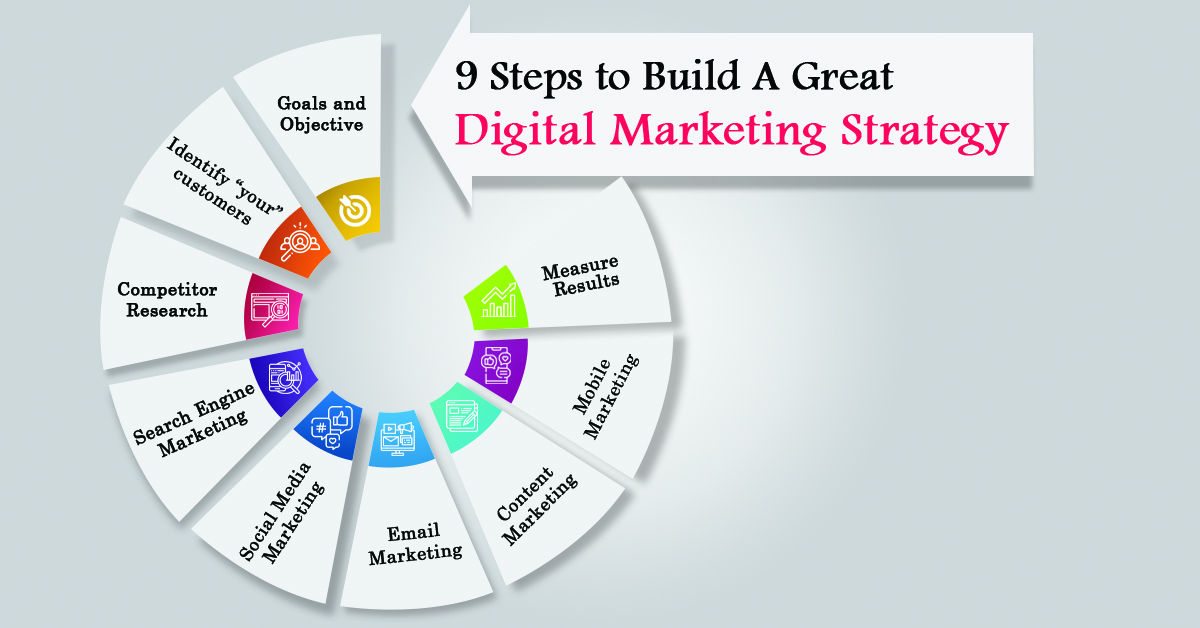
Creating a digital marketing strategy starts with setting clear goals. Goals act as the roadmap for your marketing efforts. They help you stay focused and measure success.
Identify Objectives
First, identify your marketing objectives. These should align with your business goals. Common objectives include:
- Increasing website traffic
- Boosting social media engagement
- Generating more leads
- Improving conversion rates
Use the SMART criteria to set your objectives:
| Criteria | Description |
|---|---|
| Specific | Clearly define your goal |
| Measurable | Track progress with metrics |
| Achievable | Set realistic goals |
| Relevant | Align with business objectives |
| Time-bound | Set a deadline |
Measure Success
Once your objectives are set, decide how to measure success. Use key performance indicators (KPIs) to track progress. Common KPIs include:
- Website traffic
- Conversion rates
- Social media engagement
- Email open rates
Regularly monitor these KPIs to see if you are meeting your goals. If not, adjust your strategy. Analytics tools can help track these metrics. Examples include Google Analytics and social media insights.
Setting goals and measuring success is crucial. It ensures your digital marketing strategy is effective. By following these steps, you can achieve your business objectives.
Credit: www.geekschip.com
Understanding Your Audience
Creating a successful digital marketing strategy starts with knowing your audience. You need to know who they are, what they like, and how they behave. This step is crucial for crafting messages that resonate with them.
Create Buyer Personas
Buyer personas are fictional characters. They represent your ideal customers. Creating them helps you understand customer needs and behavior.
- Demographics: Age, gender, income, education level
- Psychographics: Interests, values, lifestyle
- Behavioral: Purchasing habits, brand loyalty
Use surveys, interviews, and data to build these personas. Here’s an example:
| Persona | Details |
|---|---|
| Anna | Age 30, loves fitness, shops online |
| John | Age 45, values family time, prefers in-store shopping |
Analyze Audience Behavior
Once you have buyer personas, the next step is to analyze their behavior. This includes understanding how they interact with your brand.
- Website Analytics: Use tools like Google Analytics. Check page views, bounce rates, and session duration.
- Social Media Insights: Platforms like Facebook and Instagram offer insights. Look at engagement rates, likes, and shares.
- Email Marketing Stats: Track open rates and click-through rates. Adjust your email strategy based on this data.
Understanding audience behavior helps you refine your marketing tactics. It ensures your messages are timely and relevant.
Competitive Analysis
Competitive analysis is crucial for crafting a successful digital marketing strategy. It helps you understand your market position and learn from your competitors. By analyzing competitors, you can identify gaps and opportunities.
Identify Competitors
Start by identifying your key competitors. These could be businesses offering similar products or services. Use tools like Google Search and SEMrush to find them.
- Search for your main keywords on Google.
- Make a list of the top-ranking websites.
- Use SEMrush to find competitors based on keyword overlap.
It’s essential to look beyond direct competitors. Consider indirect competitors who offer alternative solutions.
Analyze Competitor Strategies
Analyzing competitor strategies helps you understand their strengths and weaknesses. Here are the steps:
- Website Analysis: Evaluate the design, user experience, and content quality.
- SEO Strategies: Use tools like Ahrefs to analyze their backlink profile.
- Content Marketing: Check the types of content they publish and its engagement.
- Social Media: Analyze their social media presence and follower engagement.
- Email Marketing: Subscribe to their newsletters to understand their email tactics.
Consider creating a comparison table for a clear overview:
| Aspect | Your Business | Competitor A | Competitor B |
|---|---|---|---|
| Website Design | Responsive, modern | Outdated | Modern |
| SEO | Strong backlinks | Moderate backlinks | Weak backlinks |
| Content Quality | High | Medium | Low |
| Social Media | Active, engaging | Inactive | Moderate |
| Email Marketing | Regular, valuable | Sporadic | Frequent |
Use these insights to refine your own digital marketing strategy. Aim to improve where your competitors fall short and innovate where they excel.
Choosing Marketing Channels
In digital marketing, selecting the right channels is crucial. Each channel has unique strengths. Knowing which to use can maximize your reach. Here’s a guide to help you choose the best marketing channels.
Social Media Platforms
Social media platforms are powerful for engaging with your audience. Platforms like Facebook, Instagram, and Twitter offer diverse options. You can share posts, stories, and live videos. Each platform has its unique features.
- Facebook: Great for sharing various content types.
- Instagram: Ideal for visual content like photos and videos.
- Twitter: Perfect for short updates and real-time engagement.
Choose the platform where your audience spends time. Create content that fits the platform’s style. Engage with your audience through comments and messages. Regular interaction builds trust and loyalty.
Email Marketing
Email marketing remains effective for direct communication. It allows personalized messages to your audience.
- Build an email list with sign-up forms on your website.
- Create engaging content like newsletters and promotional offers.
- Segment your audience for targeted campaigns.
Use attention-grabbing subject lines to increase open rates. Include clear calls-to-action to drive conversions. Track your email performance through metrics like open rates and click-through rates.
Content Marketing
Content marketing focuses on creating valuable content. It attracts and retains your audience. Types of content include blog posts, videos, and infographics.
| Content Type | Purpose | Platform |
|---|---|---|
| Blog Posts | Inform and educate | Website, Medium |
| Videos | Engage and entertain | YouTube, Social Media |
| Infographics | Visual storytelling | Pinterest, Blogs |
Create content that solves problems for your audience. Use keywords to improve SEO and attract organic traffic. Share your content across multiple channels for maximum reach.
Content Creation
Creating high-quality content is the heart of any effective digital marketing strategy. Content Creation drives engagement, attracts visitors, and builds brand loyalty. It involves planning, producing, and managing content that resonates with your audience. Let’s dive into the essential steps for successful content creation.
Develop Content Calendar
A content calendar helps you plan and organize your content. It ensures consistency and timely delivery. Use it to schedule blog posts, social media updates, and email newsletters.
| Week | Content Type | Topic | Platform |
|---|---|---|---|
| 1 | Blog Post | SEO Tips | Website |
| 2 | Social Media | Customer Testimonials | |
| 3 | Email Newsletter | Product Updates |
Create Engaging Content
To create engaging content, understand your audience’s needs and preferences. Use simple language, compelling visuals, and relevant information.
- Write Short Paragraphs: Keep paragraphs under 3 sentences.
- Use Bullet Points: Makes content easy to scan.
- Include Images: Visuals attract and retain attention.
Engaging content can be:
- Informative Articles
- How-to Guides
- Interactive Quizzes
Focus on solving problems and providing value. This will keep your audience coming back for more.
Seo And Sem
Creating a digital marketing strategy involves SEO and SEM. These two elements are key to driving traffic and visibility. Let’s dive into the specifics of these components.
Keyword Research
Start with keyword research. Identify the terms your target audience searches for. Use tools like Google Keyword Planner and Ahrefs. Look for keywords with high search volume and low competition.
| Tool | Purpose |
|---|---|
| Google Keyword Planner | Identify high-volume keywords |
| Ahrefs | Analyze competition |
Optimize Website
Next, optimize your website. Make sure your site is fast and mobile-friendly. Use your keywords naturally in headings, meta descriptions, and content. Ensure each page has a unique title and meta description. Use alt tags for images.
- Fast loading speed
- Mobile-friendly design
- Keyword-rich content
- Unique titles and meta descriptions
- Alt tags for images
Paid Search Campaigns
Invest in paid search campaigns. Use Google Ads to reach your audience quickly. Create targeted ads using your researched keywords. Set a budget and monitor your ads’ performance. Adjust bids and keywords based on performance data.
- Use Google Ads
- Create targeted ads
- Set a budget
- Monitor performance
- Adjust bids and keywords
Combining SEO and SEM can boost your visibility and traffic. These steps will help you create a strong digital marketing strategy.
Implementing Marketing Automation
Implementing marketing automation can revolutionize your digital marketing strategy. It saves time, increases efficiency, and boosts ROI. Automation tools handle repetitive tasks so you can focus on strategy. Let’s explore how to implement marketing automation effectively.
Select Tools
Choosing the right tools is crucial for successful marketing automation. The market offers many options, so consider your business needs. Look for tools that integrate well with your existing systems. Popular choices include HubSpot, Mailchimp, and Marketo.
| Tool | Features | Pricing |
|---|---|---|
| HubSpot | CRM, email marketing, social media management | Free to premium |
| Mailchimp | Email campaigns, landing pages, analytics | Free to premium |
| Marketo | Lead management, email marketing, analytics | Premium |
Automate Workflows
Automation workflows streamline your marketing efforts. They ensure timely and relevant communication with your audience. Start by mapping out your customer journey. Identify key touchpoints and actions to automate.
Here are steps to create an effective workflow:
- Identify Tasks: List repetitive tasks like email follow-ups and social media posts.
- Set Triggers: Define actions that will initiate the workflow, like sign-ups or purchases.
- Create Actions: Specify the actions to be taken, such as sending emails or assigning tasks.
- Monitor Performance: Use analytics to track and optimize your workflows.
Automating workflows enhances efficiency and improves customer engagement. It frees up time for strategic planning and creative tasks.
Credit: www.boldxcollective.com
Monitoring And Analytics
Monitoring and analytics are crucial for any digital marketing strategy. They help track performance and make data-driven decisions. This ensures your marketing efforts are effective and efficient.
Track Kpis
Key Performance Indicators (KPIs) are critical metrics. They measure the success of your digital marketing efforts. Common KPIs include:
- Website Traffic: Number of visitors to your site.
- Conversion Rate: Percentage of visitors who take a desired action.
- Click-Through Rate (CTR): Number of clicks divided by the number of impressions.
- Customer Acquisition Cost (CAC): Total cost to acquire a new customer.
Use tools like Google Analytics to track these KPIs. Regularly review the data to spot trends and patterns.
Adjust Strategies
Your digital marketing strategy should be flexible. Adjust your strategies based on KPI performance. Here are steps to follow:
- Identify underperforming areas using your KPI data.
- Analyze the reasons for poor performance.
- Implement changes to improve these areas.
- Continue to monitor the impact of these changes.
For example, if your conversion rate is low, test different landing pages. Experiment with various elements such as:
- Headlines
- Call-to-action buttons
- Images
- Content layout
Make small, incremental changes. This helps identify what works best.
Frequently Asked Questions
What Is A Digital Marketing Strategy?
A digital marketing strategy is a plan that outlines how to achieve marketing goals through online channels. It involves tactics like SEO, social media, content marketing, and email campaigns.
Why Is A Digital Marketing Strategy Important?
A digital marketing strategy is crucial for reaching your target audience online. It helps in boosting brand awareness, increasing sales, and achieving business goals.
How Do I Start A Digital Marketing Strategy?
To start a digital marketing strategy, define your goals and target audience. Then, choose the right digital channels and create quality content to engage your audience.
What Are Key Components Of A Digital Marketing Strategy?
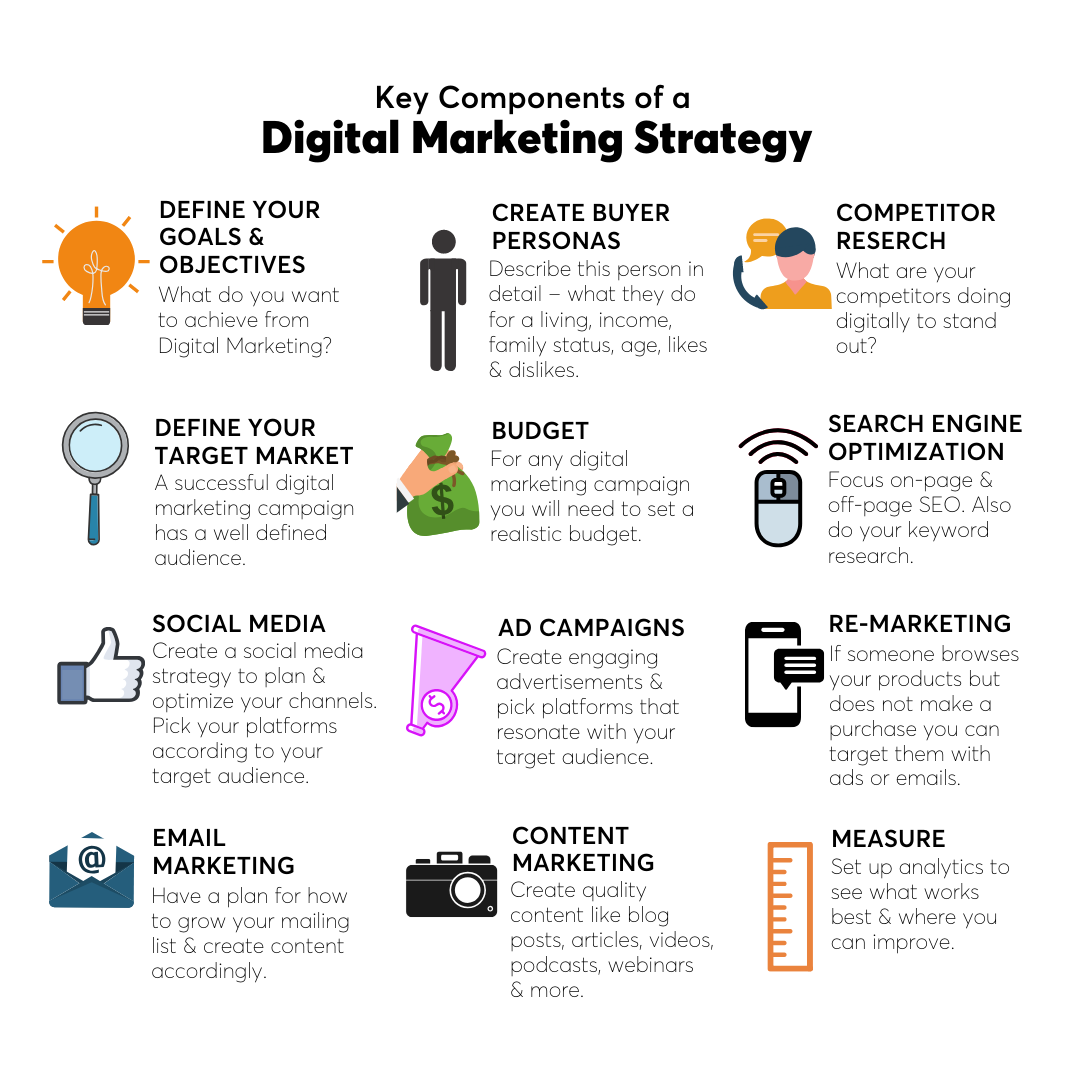
Key components include SEO, content marketing, social media, email marketing, and PPC. Each element plays a role in reaching and engaging your target audience.
Conclusion
Crafting a digital marketing strategy boosts your online presence and business growth. Focus on clear objectives, target audience, and effective channels. Regularly analyze and adapt your strategies for optimal results. With persistence and creativity, your digital marketing efforts will flourish, driving success in an ever-evolving digital landscape.