
Use LinkedIn for lead generation by optimizing your profile and actively engaging with your target audience. Consistently share valuable content and connect with potential leads.
LinkedIn is a powerful tool for businesses aiming to generate leads. Its professional network enables direct access to decision-makers. Optimizing your profile is the first crucial step. A compelling headline and summary can attract attention. Regularly sharing valuable content helps build authority and trust.
Engaging with posts, joining relevant groups, and participating in discussions boost visibility. Connecting with potential leads and sending personalized messages can open doors to new opportunities. With a strategic approach, LinkedIn can significantly enhance your lead generation efforts, driving business growth and fostering valuable relationships.
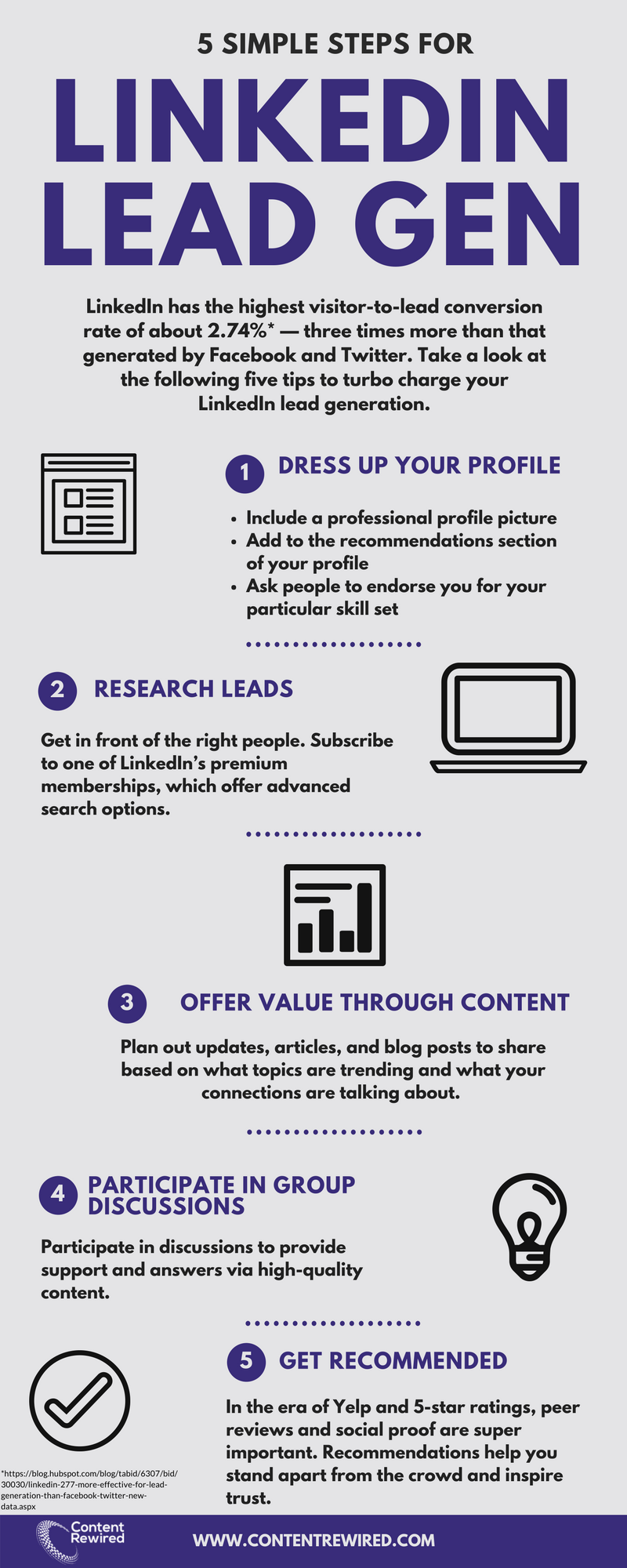
Credit: contentrewired.com
Optimizing Your Profile
To use LinkedIn for lead generation, you must first optimize your profile. A well-optimized profile attracts potential leads and establishes your credibility. This section will guide you on how to craft a compelling headline and create a professional summary.
Crafting A Compelling Headline
Your LinkedIn headline is crucial. It is the first thing people see. Ensure it stands out and clearly states your value.
- Include your job title and skills.
- Mention your industry.
- Use keywords relevant to your field.
A compelling headline could be: “Digital Marketing Expert | Helping Brands Grow Online | SEO Specialist”. This headline tells people what you do and how you can help them.
Creating A Professional Summary
Your summary should be a brief overview of your professional life. It should highlight your skills, experiences, and what you offer. Aim for a summary that is clear and concise.
| Section | Details |
|---|---|
| Introduction | Briefly introduce yourself and your role. |
| Skills | List your key skills and competencies. |
| Experience | Highlight your major achievements. |
| Call-to-Action | Encourage viewers to connect or message you. |
Example: “I am a Digital Marketing Expert with over 10 years of experience. My skills include SEO, content marketing, and social media strategy. I have helped brands grow their online presence significantly. Let’s connect to discuss how we can collaborate.”
Optimizing your profile with a strong headline and a professional summary sets a solid foundation. This will help you attract the right leads on LinkedIn.
Credit: revnew.com
Building A Targeted Network
Building a targeted network on LinkedIn is crucial. Connecting with the right people can drive your lead generation efforts. This section will guide you through the steps to create a focused network.
Identifying Key Connections
Start by identifying key connections in your industry. Look for individuals who can provide valuable insights and opportunities. Use LinkedIn’s search feature to find professionals based on job titles, companies, or skills.
| Criteria | Description |
|---|---|
| Job Titles | Search for specific roles that align with your business. |
| Companies | Look for people working at companies you want to target. |
| Skills | Find professionals with skills relevant to your niche. |
After identifying potential connections, send personalized connection requests. Mention a common interest or mutual connection to increase your chances of acceptance.
Engaging With Industry Leaders
Engaging with industry leaders can help you expand your network. Follow leaders in your field and interact with their posts. Leave thoughtful comments and share their content to get noticed.
- Follow industry leaders to stay updated.
- Comment on their posts with meaningful insights.
- Share their content to show your support.
These interactions can help you build relationships with influential people. Building such relationships can open doors to new opportunities and leads.
Content Strategy
Creating a strong content strategy on LinkedIn can drive lead generation. By sharing valuable content and using LinkedIn Articles, you can engage your audience effectively.
Sharing Valuable Content
Sharing valuable content is key to attracting leads on LinkedIn. Make sure to post regularly and keep your content relevant. Use a mix of text, images, and videos to keep your audience engaged.
- Post updates about industry news.
- Share case studies and success stories.
- Engage with your audience by asking questions.
Use hashtags to increase your content’s reach. Engage with comments to build relationships and trust. This approach helps in establishing your expertise in your industry.
Utilizing Linkedin Articles
LinkedIn Articles allow you to dive deeper into topics. They are a great way to showcase your knowledge and expertise.
- Write on trending topics in your industry.
- Provide actionable insights and tips.
- Include keywords to improve search visibility.
LinkedIn Articles can be shared on your profile and in groups. This amplifies your reach and attracts more leads. Use images and videos within your articles to make them more engaging.
Below is a simple table summarizing the key points:
| Content Type | Tips |
|---|---|
| Updates | Industry news, case studies, questions |
| Articles | Trending topics, actionable insights, keywords |
By implementing these strategies, you can effectively use LinkedIn for lead generation.
Leveraging Linkedin Groups
LinkedIn Groups are a goldmine for lead generation. They bring together professionals with similar interests. This creates an excellent opportunity to connect. By joining and actively participating, you can build valuable relationships. Let’s explore how to leverage these groups effectively.
Joining Relevant Groups
Start by finding groups that align with your industry and interests. Use the search bar to look for keywords related to your field. Focus on groups with high engagement. These will give you more opportunities to connect.
| Criteria | Details |
|---|---|
| Industry | Join groups within your specific industry. |
| Engagement | Look for groups with active discussions. |
| Size | Choose groups with a large number of members. |
Join multiple groups to widen your reach. This will increase your chances of finding leads.
Participating In Discussions
Engage actively in group discussions. Start by commenting on existing posts. Provide valuable insights and answer questions. This builds your authority in the group.
- Share helpful articles or resources.
- Ask questions to spark conversations.
- Respond to comments on your posts.
Consistency is key. Participate regularly to stay visible. Your active participation will attract potential leads.
Utilizing Linkedin Sales Navigator
Utilizing LinkedIn Sales Navigator can significantly enhance your lead generation efforts. This powerful tool offers advanced features that help you find and engage with potential clients. Let’s explore how to maximize its potential.
Advanced Search Techniques
LinkedIn Sales Navigator allows for precise searches. You can filter prospects by industry, location, and company size. This helps you identify the most relevant leads.
Use Boolean search to refine your results. Combine keywords with AND, OR, and NOT for targeted searches. For instance, “software AND engineer NOT intern” filters out interns.
Save your searches to stay updated on new leads. Sales Navigator alerts you when new profiles match your criteria.
Personalized Outreach
Personalized outreach improves response rates. Use LinkedIn’s InMail feature to send customized messages. Reference mutual connections or shared interests to build rapport.
Include the recipient’s name and a specific detail about their work. This shows you have done your homework.
Follow up on your messages. Persistence often leads to better results. Keep your follow-ups polite and professional.
| Feature | Description |
|---|---|
| Advanced Search | Filters prospects by industry, location, and company size. |
| Boolean Search | Uses keywords with AND, OR, and NOT for targeted results. |
| Saved Searches | Keeps you updated on new leads matching your criteria. |
| InMail | Sends personalized messages to potential leads. |
Engaging Prospects
Engaging prospects on LinkedIn is essential for effective lead generation. You need to connect meaningfully with potential clients. This involves sending thoughtful messages and following up strategically. Below, we’ll explore how to craft effective messages and follow up in a smart way.
Crafting Effective Messages
Creating a compelling message is crucial. Your message should be clear and concise. Focus on the prospect’s needs and pain points.
- Begin with a personalized greeting.
- Mention a common connection or interest.
- State the purpose of your message.
- Highlight the value you offer.
- End with a clear call to action.
An example message could be:
  Hi [Name],

  I noticed we both follow [Common Interest].

  I'm reaching out because [Reason].

  I believe our [Service/Product] can help you with [Pain Point].

  Would you be open to a quick call next week?

  Best regards,

  [Your Name]
Keep your messages short and to the point. Personalization increases response rates.
Following Up Strategically
Follow-ups are important but should be done thoughtfully. Avoid being too pushy. Space out your messages to avoid overwhelming the prospect.
- Send a polite reminder a week after your initial message.
- Reference your previous message and add new value.
- Wait another week before sending a final follow-up.
Here’s a sample follow-up sequence:
| Time | Message |
|---|---|
| Day 1 | Initial message |
| Day 8 | First follow-up |
| Day 15 | Second follow-up |
Patience and persistence pay off. Ensure each follow-up adds value. This keeps the prospect engaged and interested.
Measuring Success
Measuring success on LinkedIn is essential for effective lead generation. Tracking the right metrics ensures you know what’s working. Adjusting your strategies based on these metrics helps you maximize your efforts.
Tracking Key Metrics
To measure success, track key metrics that matter. Here are some important metrics:
- Profile Views: The number of people viewing your profile.
- Connection Requests: The count of new connections added.
- Engagement Rate: Likes, comments, and shares on your posts.
- Message Response Rate: Replies to your sent messages.
- Lead Conversion Rate: Leads that turn into clients.
Use LinkedIn Analytics to track these metrics. Regularly review your analytics to stay updated.
Adjusting Strategies
Adjust your strategies based on the metrics you track. Here’s how to do it:
- Low Profile Views: Optimize your profile with keywords and a professional photo.
- Few Connection Requests: Send personalized connection requests. Engage with potential leads.
- Low Engagement Rate: Post valuable content. Ask questions to encourage interaction.
- Poor Message Response Rate: Craft engaging messages. Follow up if there’s no response.
- Low Lead Conversion Rate: Nurture leads with relevant content. Build trust before pitching.
By adjusting your strategies, you can improve your LinkedIn lead generation results. Regularly evaluate your performance and make necessary changes.

Credit: convertwithcontent.com
Best Practices
LinkedIn is a powerful tool for generating leads. Following best practices ensures success. Below are key strategies to maximize your LinkedIn efforts.
Maintaining Professionalism
Professionalism is crucial on LinkedIn. Your profile is your digital business card. Keep it updated and clean.
- Use a professional photo.
- Craft a compelling headline.
- Write a clear and concise summary.
Communicate professionally. Use proper grammar and polite language. Avoid slang or casual talk.
| Do | Don’t |
|---|---|
| Respond promptly to messages | Spam connections with promotions |
| Share valuable content | Post irrelevant updates |
Engage with your network. Comment on posts and participate in discussions. Show your expertise and build trust.
Avoiding Common Mistakes
Avoiding mistakes can save time and effort. Here are common pitfalls and how to avoid them.
- Over-promoting: Balance promotions with valuable content.
- Ignoring Analytics: Track your performance. Use LinkedIn insights.
- Neglecting Your Profile: Regularly update your profile. Keep it relevant.
Spammy messages can turn off potential leads. Personalize your messages. Make them relevant and respectful.
Ignoring connection requests is another mistake. Review and respond to requests. Build a meaningful network.
By following these best practices, you can effectively generate leads on LinkedIn. Maintain professionalism and avoid common mistakes to succeed.
Frequently Asked Questions
How Can Linkedin Generate Leads?
LinkedIn can generate leads by optimizing your profile, joining relevant groups, and sharing valuable content. Use LinkedIn Sales Navigator for advanced search and lead recommendations. Engage with potential leads through personalized messages and consistent follow-ups.
What Are Linkedin’s Best Practices For Lead Generation?
Best practices include creating a professional profile, posting regularly, and engaging with your network. Use LinkedIn Ads for targeted campaigns. Leverage LinkedIn Analytics to track performance and adjust strategies accordingly.
How Do I Optimize My Linkedin Profile For Leads?
Optimize your LinkedIn profile by using a professional photo, writing a compelling headline, and adding a detailed summary. Include relevant keywords throughout your profile. Showcase your experience, skills, and recommendations to build credibility.
What Linkedin Tools Help In Lead Generation?
LinkedIn Sales Navigator, LinkedIn Ads, and LinkedIn Analytics are essential tools for lead generation. Sales Navigator offers advanced search filters and lead recommendations. LinkedIn Ads allow targeted advertising. Analytics help track performance and refine strategies.
Conclusion
Mastering LinkedIn for lead generation can transform your business. Utilize these strategies to attract quality leads. Engage consistently and optimize your profile. Leverage LinkedIn’s features to nurture relationships. By following these steps, you can turn LinkedIn into a powerful lead generation tool, driving growth and success for your business.