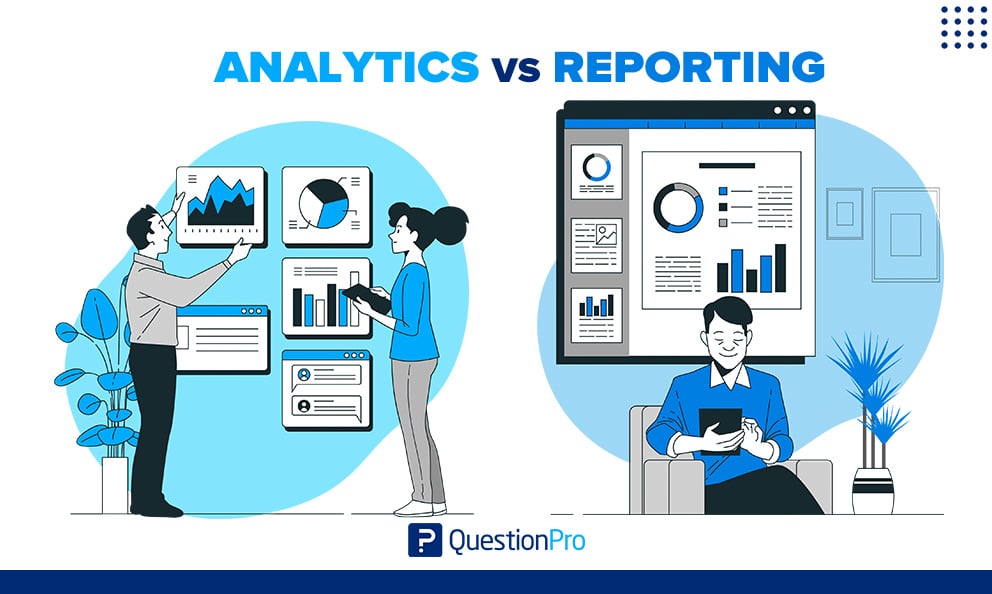
Analytics and reporting involve collecting and interpreting data to make informed business decisions. These processes help track performance and identify trends.
Analytics and reporting are crucial for businesses aiming to optimize their strategies and improve performance. By collecting and analyzing data, organizations can gain insights into customer behavior, market trends, and operational efficiencies. Effective reporting turns complex data into understandable metrics, enabling stakeholders to make data-driven decisions.
It also helps in identifying areas for improvement and tracking the success of various initiatives. Businesses that utilize analytics and reporting can stay competitive, innovate, and achieve better outcomes. In today’s data-driven world, these tools are indispensable for sustainable growth and success.

Credit: www.qlik.com
Introduction To Analytics
Analytics is the process of examining data to find meaningful patterns. It helps businesses make better decisions. Understanding analytics is crucial in today’s data-driven world.
Importance In Business
Analytics plays a pivotal role in business success. Here are some key reasons why:
- Informed Decision Making: Businesses use data to make smart choices.
- Performance Tracking: It helps monitor and improve business processes.
- Customer Insights: Understand customer behavior to enhance satisfaction.
- Competitive Advantage: Stay ahead by leveraging data insights.
Historical Perspective
Analytics has a rich history. Here’s a brief overview:
| Time Period | Development |
|---|---|
| 1960s | Basic data analysis using mainframe computers. |
| 1980s | Business intelligence tools emerged. |
| 2000s | Big data and advanced analytics became popular. |
| 2020s | AI-driven analytics dominate the industry. |
Understanding the evolution of analytics helps appreciate its current capabilities. Businesses now utilize advanced tools for deeper insights.
Types Of Analytics
Analytics can be divided into three main types: Descriptive Analytics, Predictive Analytics, and Prescriptive Analytics. Each type serves a unique purpose and provides different insights.
Descriptive Analytics
Descriptive Analytics helps understand what has happened in the past. It uses historical data to identify trends and patterns. Businesses use this to measure performance. Common tools include dashboards and reports.
- Dashboards: Visual representation of key metrics.
- Reports: Detailed data summaries and statistics.
This type of analytics is crucial for tracking progress. It answers the question, “What happened?”
Predictive Analytics
Predictive Analytics forecasts future outcomes based on historical data. It uses statistical models and machine learning techniques. This helps predict trends and behaviors. It answers the question, “What could happen?”
| Technique | Purpose |
|---|---|
| Regression Analysis | Predicts relationships between variables. |
| Time Series Analysis | Forecasts future data points. |
Businesses can use these predictions to make informed decisions.
Prescriptive Analytics
Prescriptive Analytics suggests actions to achieve desired outcomes. It uses optimization and simulation algorithms. This type of analytics goes beyond predictions. It answers the question, “What should we do?”
- Identifies the best course of action.
- Considers multiple scenarios and constraints.
- Provides recommendations based on data insights.
Businesses can implement these recommendations to optimize their operations.
Key Metrics To Track
Analytics and reporting are crucial for business success. To make informed decisions, you need to track specific metrics. These metrics help understand customer behavior, financial health, and operational efficiency.
Customer Metrics
Tracking customer metrics is vital for any business. Here are some essential customer metrics:
- Customer Acquisition Cost (CAC): This is the cost to acquire a new customer.
- Customer Lifetime Value (CLV): This measures the total value a customer brings to your business over time.
- Churn Rate: This metric shows the percentage of customers who stop using your product or service.
- Net Promoter Score (NPS): This measures customer loyalty and satisfaction by asking how likely they are to recommend your product.
Financial Metrics
Financial metrics provide insights into the financial health of your business. Key financial metrics include:
- Revenue: This is the total income generated from sales.
- Gross Profit Margin: This measures the difference between revenue and the cost of goods sold, divided by revenue.
- Net Profit Margin: This is the percentage of revenue left after all expenses have been deducted.
- Return on Investment (ROI): This calculates the gain or loss generated on an investment relative to its cost.
Operational Metrics
Operational metrics help you understand the efficiency and effectiveness of your business processes. Important operational metrics include:
- Cycle Time: This measures the time it takes to complete a process from start to finish.
- Utilization Rate: This shows how well your resources are being used.
- First Pass Yield (FPY): This indicates the percentage of products that meet quality standards without rework.
- Order Fulfillment Time: This tracks the time taken to fulfill customer orders.
Data Collection Methods
Understanding your audience is key to success. Collecting data helps you do this. There are many ways to gather data. Each method has its own benefits. Let’s explore some of the popular data collection methods.
Surveys And Questionnaires
Surveys and questionnaires are great for gathering opinions. You can ask specific questions. This helps you get detailed answers. You can use online tools to create them. Google Forms and SurveyMonkey are popular choices.
- Easy to distribute
- Can reach a large audience
- Provides quantitative data
Create short and clear questions. This ensures better responses. Use multiple-choice questions for easy analysis. Open-ended questions can give deeper insights.
Transaction Data
Transaction data is valuable. It comes from sales and purchases. This data shows customer behavior. You can track what products are popular.
| Benefit | Example |
|---|---|
| Identifies best-selling products | Top 10 products sold this month |
| Shows peak buying times | Most sales happen on weekends |
Analyze this data to improve your business. Offer discounts on popular items. Stock up on products that sell fast. This keeps your customers happy.
Social Media Insights
Social media is a goldmine of data. Platforms like Facebook and Twitter offer insights. These insights show user engagement. You can see which posts get the most likes and shares.
- Track user interactions
- Measure brand awareness
- Understand customer sentiment
Use tools like Facebook Insights and Twitter Analytics. These tools provide detailed reports. You can see how your audience reacts. Adjust your strategy based on this data. This helps you reach more people.
Understanding these data collection methods can help your business grow. Use the right method for your needs.
Tools And Technologies
Analytics and reporting have become crucial for businesses. The right tools and technologies make data analysis effective. They help in extracting meaningful insights. Below are some essential tools and technologies.
Business Intelligence Tools
Business Intelligence (BI) tools are essential. They help in transforming raw data into actionable insights. They support data-driven decision-making processes. Here are some top BI tools:
- Tableau: Known for its data visualization capabilities.
- Power BI: A Microsoft product that integrates well with other Microsoft services.
- QlikView: Offers powerful data discovery and analytics features.
Data Visualization Software
Data visualization software is important. It makes complex data easy to understand. These tools create visual representations of data. Here are some popular data visualization tools:
- Google Data Studio: Free and integrates with Google services.
- D3.js: A JavaScript library for producing dynamic, interactive data visualizations.
- Infogram: User-friendly and great for creating infographics.
Big Data Platforms
Big data platforms handle large volumes of data. They store, process, and analyze big data. These platforms are crucial for businesses dealing with vast amounts of data. Some popular big data platforms include:
- Hadoop: An open-source framework that processes large data sets.
- Spark: Known for its speed and ease of use in big data processing.
- Amazon Web Services (AWS): Offers a wide range of big data tools and services.
Credit: www.visier.com
Building Effective Reports
Creating effective reports is essential for data-driven decisions. Clear and concise reports help teams understand performance and make improvements. This section will guide you through building impactful reports.
Report Design Tips
Good design makes a report easy to read. Here are some tips:
- Use Clear Headings: Organize content with headings and subheadings.
- Consistent Formatting: Use the same fonts, colors, and sizes.
- Visual Elements: Include charts, graphs, and images for better clarity.
- Avoid Clutter: Keep your layout clean and simple.
Choosing The Right Kpis
Key Performance Indicators (KPIs) are crucial for tracking success. Select KPIs that align with your goals. Here are some tips:
- Understand Your Objectives: Know what you want to achieve.
- Relevance: Choose KPIs that matter to your goals.
- Measurable: Ensure KPIs can be quantified.
- Actionable: KPIs should lead to actionable insights.
Interactive Dashboards
Interactive dashboards make data exploration easy. They allow users to filter and drill down into the data. Consider the following:
| Feature | Benefit |
|---|---|
| Filters | Users can view data from different angles. |
| Drill-Down | Explore detailed data behind summaries. |
| Real-Time Updates | See the latest data without refreshing. |
Interactive dashboards make data insights more accessible. They help teams make informed decisions faster.
Case Studies
Analytics and reporting are essential tools for any business. They help companies understand their data and make informed decisions. Let’s explore some real-world examples of how businesses have used analytics and reporting to achieve success and learn valuable lessons.
Success Stories
Many companies have seen incredible results through effective use of analytics and reporting. Below are a few examples:
| Company | Challenge | Solution | Outcome |
|---|---|---|---|
| Company A | Low conversion rates | Implemented data-driven marketing strategies | Increased conversions by 40% |
| Company B | High customer churn | Used predictive analytics to identify at-risk customers | Reduced churn by 25% |
| Company C | Inventory management issues | Adopted real-time inventory tracking | Improved stock levels by 30% |
Lessons Learned
Through these success stories, several key lessons have emerged:
- Data-Driven Decisions: Trust the data, not just intuition.
- Predictive Analytics: Use it to foresee trends and problems.
- Real-Time Tracking: Keep data updated to make timely decisions.
Understanding these lessons can help businesses improve their operations. Implementing analytics and reporting effectively can lead to significant gains.

Credit: concentrasolutions.com
Future Trends
The world of Analytics and Reporting is evolving rapidly. Understanding future trends is crucial for staying ahead. Let’s explore some key areas that will shape the future.
Ai And Machine Learning
AI and Machine Learning are transforming analytics. They help in predicting trends accurately.
With AI, you can automate complex data analysis tasks. It saves time and reduces errors.
Machine Learning models learn from data. They improve their accuracy over time. This makes them powerful tools for forecasting.
- Automated Insights – AI can provide insights without human intervention.
- Predictive Analysis – Machine Learning predicts future trends.
- Efficiency – AI speeds up data processing and analysis.
Real-time Analytics
Real-Time Analytics is gaining importance. Businesses need instant data insights.
With real-time analytics, you can make quick decisions. This is crucial in a fast-paced environment.
Real-time data helps in monitoring ongoing activities. It ensures immediate responses to changes.
| Benefits | Description |
|---|---|
| Immediate Insights | Access data as it happens. |
| Faster Decisions | Make informed decisions quickly. |
| Operational Efficiency | Improve processes with real-time data. |
Data Privacy Considerations
Data Privacy is a critical concern for businesses and users. Ensuring privacy is essential in analytics.
New regulations are being implemented globally. Companies must comply with these to avoid penalties.
Data anonymization and encryption are key strategies. They help protect sensitive information.
- Compliance – Adhere to local and global data privacy laws.
- Security Measures – Implement strong data security protocols.
- User Trust – Ensure users feel safe sharing their data.
Data privacy will continue to be a significant focus. Businesses must stay updated with the latest regulations.
Frequently Asked Questions
What Is Analytics And Reporting?
Analytics and reporting involve collecting, analyzing, and interpreting data to make informed decisions. They help businesses understand trends, measure performance, and optimize strategies.
Why Are Analytics Important For Businesses?
Analytics provide valuable insights into customer behavior, market trends, and operational efficiency. This helps businesses make data-driven decisions, improve performance, and achieve goals.
How Do Reporting Tools Benefit Companies?
Reporting tools automate data collection and visualization. They provide clear, actionable insights, saving time and enhancing decision-making efficiency.
What Are Key Features Of Good Reporting Tools?
Good reporting tools offer real-time data, customizable dashboards, and integration with various data sources. They should be user-friendly and scalable.
Conclusion
Mastering analytics and reporting can transform your business insights. It empowers data-driven decisions and strategic growth. Invest in the right tools and training. Regularly review your metrics to stay competitive. Embrace the power of analytics to drive success and innovation.
Your business’s future depends on it. Start leveraging data today.