
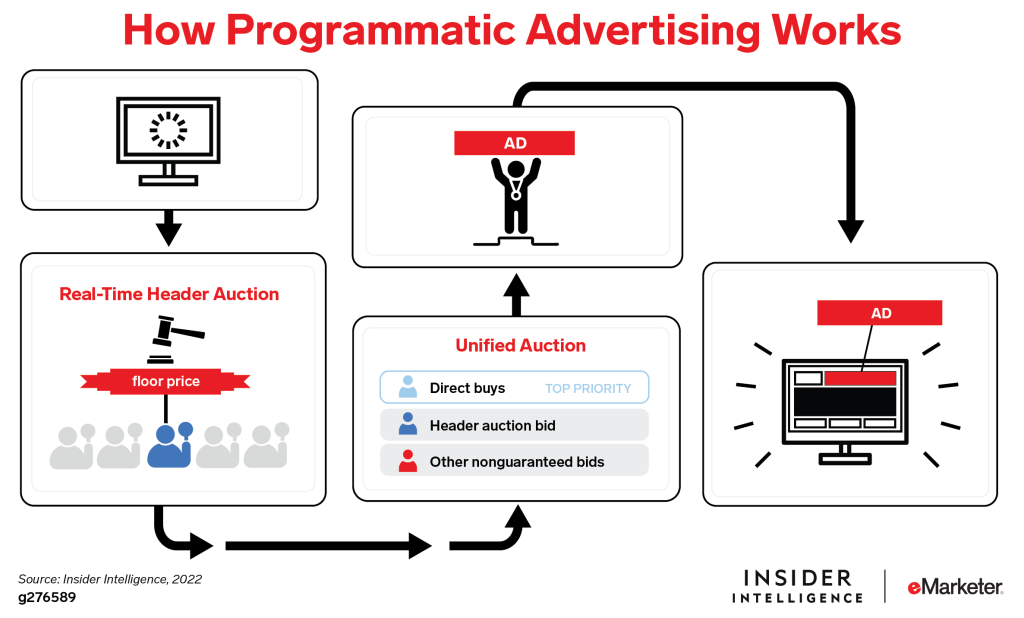
Programmatic advertising automates the buying and selling of online ad space. It uses algorithms and real-time bidding to target audiences effectively.
Programmatic advertising revolutionizes the digital marketing landscape. It offers precise audience targeting through automated processes. Marketers benefit from real-time data and insights. This allows for optimized ad placements and budget efficiency. Businesses can reach their desired audience with minimal manual intervention.
The process involves using advanced algorithms to analyze user behavior. Real-time bidding ensures that ads are placed in front of the right people at the right time. This method improves return on investment and reduces wasted ad spend. Programmatic advertising continues to grow, making it essential for modern digital marketing strategies.
Introduction To Programmatic Advertising
Programmatic advertising is transforming the way businesses approach digital marketing. It uses automation to buy and sell ads in real-time, ensuring efficiency and effectiveness. This technology-driven method makes advertising more precise and data-driven.
The Evolution Of Advertising
Advertising has come a long way from traditional methods. Initially, ads were placed in newspapers, radios, and TV. These methods were broad and less targeted. With the advent of the internet, digital ads became popular. Early digital ads relied on manual processes and were time-consuming.
Now, programmatic advertising has taken over. It uses algorithms and data to make decisions. This has significantly improved ad targeting and efficiency. As a result, it saves time and money for businesses.
What Sets Programmatic Apart
Several features set programmatic advertising apart from traditional methods:
- Automation: Programmatic ads are bought and sold automatically.
- Real-Time Bidding (RTB): Ads are auctioned in real-time, ensuring the best price.
- Targeted Ads: Uses data to target specific audiences with precision.
- Efficiency: Reduces the time and effort needed to manage ad campaigns.
| Feature | Traditional Advertising | Programmatic Advertising |
|---|---|---|
| Automation | No | Yes |
| Real-Time Bidding | No | Yes |
| Targeting | Broad | Precise |
| Efficiency | Low | High |
Programmatic advertising is not just a trend. It is the future of digital marketing. Businesses that adopt it will stay ahead in a competitive market.

Credit: mountain.com
How Programmatic Advertising Works
Programmatic advertising automates the buying and selling of ad space. It uses advanced algorithms and real-time bidding. This makes ad placement efficient and effective.
The Role Of Algorithms
Algorithms play a key role in programmatic advertising. They analyze user data to target the right audience. Algorithms consider factors like:
- Browsing history
- Demographics
- Location
These algorithms ensure ads reach the most relevant users. This increases engagement and conversion rates.
Real-time Bidding Explained
Real-time bidding (RTB) is a major component of programmatic advertising. It occurs in milliseconds as a user loads a webpage. Here’s how RTB works:
- An ad request is sent to an ad exchange.
- Advertisers bid for the ad space in real-time.
- The highest bid wins, and the ad is displayed to the user.
RTB allows for highly targeted ad placements. It ensures that ads are shown to the right people at the right time.
| Component | Function |
|---|---|
| Algorithms | Analyze data to target the right audience. |
| Real-Time Bidding | Automates the bidding process in milliseconds. |
In summary, programmatic advertising uses algorithms and real-time bidding to automate ad buying. This makes the process fast, efficient, and targeted.
Benefits Of Programmatic Advertising
Programmatic advertising has revolutionized the digital marketing space. It offers a range of benefits that make it a popular choice for advertisers. From increased efficiency to enhanced targeting capabilities, programmatic advertising is transforming how brands reach their audiences.
Efficiency And Automation
Programmatic advertising uses automated technology. This replaces manual tasks in the ad buying process. Automation saves time and reduces human error. Advertisers can launch campaigns quickly. They can also make adjustments in real-time.
Here’s a quick comparison:
| Traditional Advertising | Programmatic Advertising |
|---|---|
| Manual processes | Automated processes |
| Long setup times | Quick campaign launches |
| Higher risk of errors | Reduced errors |
Enhanced Targeting Capabilities
Programmatic advertising allows for precise audience targeting. This means ads are shown to the right people. Advertisers can target based on demographics, interests, and behaviors.
Benefits of enhanced targeting include:
- Higher engagement rates
- Better return on investment
- Less wasted ad spend
Here’s a simple example:
- A user visits a sports website.
- Programmatic ad tech identifies the user as a sports fan.
- The user sees ads for sports gear and events.
This process ensures ads are relevant to the user. This increases the chances of conversion.

Credit: www.searchenginejournal.com
Types Of Programmatic Advertising
Understanding the types of programmatic advertising can be complex. This section breaks it down into two main types: Open Auctions and Private Marketplaces. Each type has its unique benefits and functionalities.
Open Auctions
Open Auctions are the most common type of programmatic advertising. In an open auction, ad inventory is available to any advertiser. This type of auction is also known as a real-time bidding (RTB) auction.
The process is simple:
- A user visits a website.
- The website’s ad space is available for auction.
- Advertisers bid for the ad space in real-time.
- The highest bid wins the ad space.
Open Auctions are ideal for advertisers wanting wide reach. They offer a competitive environment for buying ad impressions.
Private Marketplaces
Private Marketplaces (PMPs) are more exclusive. These are invite-only auctions where premium publishers offer their ad space to select advertisers.
Key features include:
- High-quality ad inventory
- Better brand safety
- More control over ad placements
The process for PMPs:
- The publisher invites select advertisers.
- Advertisers bid for the ad space.
- The highest bid wins, but it’s not always real-time.
PMPs are great for advertisers seeking high-quality placements. They offer a more controlled environment for their ads.
Key Players In The Programmatic Ecosystem
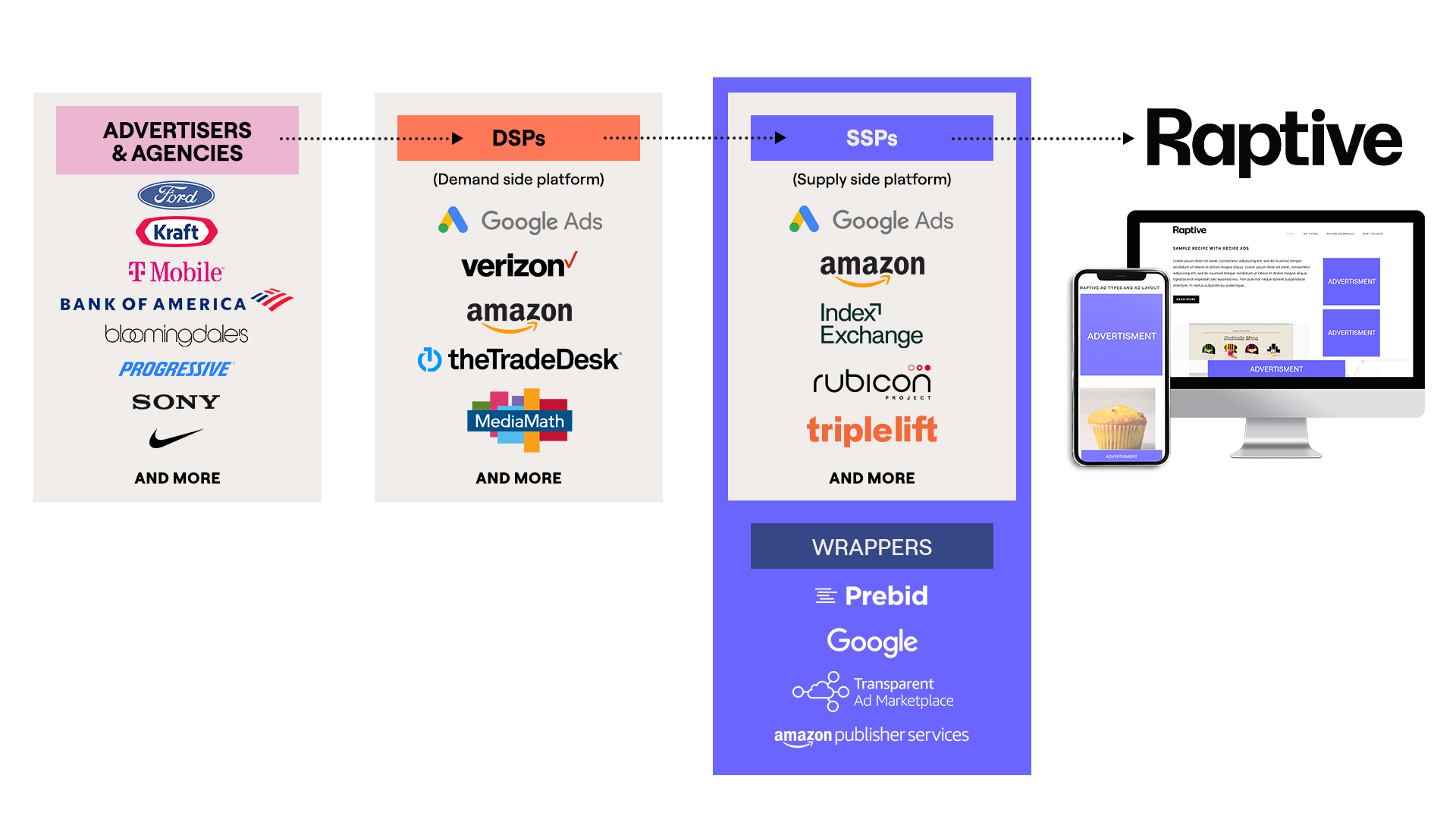
Understanding programmatic advertising requires knowing its key players. These players include platforms and technologies enabling automated buying and selling of ad space. They ensure ads reach the right audience at the right time. Here, we explore two crucial components: Demand-Side Platforms (DSPs) and Supply-Side Platforms (SSPs).
Demand-side Platforms (dsps)
Demand-Side Platforms, or DSPs, are essential in programmatic advertising. They allow advertisers to buy ad space from multiple sources. DSPs use algorithms to target specific audiences. This ensures the ads are shown to the right people.
Key functions of DSPs:
- Automated ad buying
- Audience targeting
- Real-time bidding (RTB)
- Data integration
- Performance tracking
Some popular DSPs include:
| DSP Name | Main Feature |
|---|---|
| Google Display & Video 360 | Comprehensive ad buying |
| MediaMath | Advanced data integration |
| AppNexus | Customizable solutions |
Supply-side Platforms (ssps)
Supply-Side Platforms, or SSPs, help publishers sell their ad space. They connect publishers with multiple ad exchanges and networks. SSPs enable publishers to maximize their ad revenue.
Key functions of SSPs:
- Inventory management
- Ad space pricing
- Yield optimization
- Real-time bidding (RTB)
- Performance analytics
Some well-known SSPs include:
| SSP Name | Main Feature |
|---|---|
| Google Ad Manager | Integrated ad management |
| Rubicon Project | High scalability |
| PubMatic | Comprehensive analytics |
Both DSPs and SSPs play vital roles in the programmatic ecosystem. They ensure smooth and efficient ad transactions. Understanding these platforms helps in leveraging programmatic advertising effectively.
Credit: raptive.com
Challenges In Programmatic Advertising
Programmatic advertising has revolutionized the digital marketing landscape. Despite its advantages, it faces several challenges. Understanding these challenges can help businesses navigate them more effectively.
Ad Fraud Concerns
Ad fraud is a significant issue in programmatic advertising. Fraudsters use various techniques to exploit the system. This results in wasted ad spend and misleading metrics. Common forms of ad fraud include:
- Click fraud
- Impression fraud
- Domain spoofing
Implementing strict monitoring and verification processes can help reduce ad fraud. Businesses should use reliable anti-fraud tools and collaborate with trusted partners.
Privacy And Data Issues
Privacy and data concerns are paramount in programmatic advertising. Consumers are more aware of their data privacy rights. This has led to stricter regulations, such as GDPR and CCPA.
Advertisers must ensure they comply with these regulations. Failure to do so can result in hefty fines and reputational damage. Key measures include:
- Obtaining explicit consent for data usage
- Implementing robust data protection measures
- Regularly updating privacy policies
Maintaining transparency with consumers builds trust and ensures compliance.
Future Trends In Programmatic Advertising
Programmatic advertising is changing the digital marketing landscape. New trends are shaping its future. These trends promise more efficiency and targeting capabilities. Let’s explore these exciting trends.
Ai And Machine Learning Integration
AI and machine learning are transforming programmatic advertising. They help in better data analysis and decision-making. These technologies offer real-time ad optimization. They ensure the right ads reach the right audience.
AI can predict user behavior and preferences. Machine learning improves campaign performance over time. This leads to higher ROI and better user engagement.
Growth Of Connected Tv Advertising
Connected TV (CTV) advertising is on the rise. More people are streaming content on smart TVs. This offers new opportunities for advertisers. CTV ads are more engaging and interactive.
Programmatic platforms now support CTV ads. They offer precise targeting and measurement. This trend is set to grow rapidly. It’s a game-changer for digital marketing.
| Trend | Impact |
|---|---|
| AI and Machine Learning | Improved targeting and optimization |
| Connected TV Advertising | Increased engagement and reach |
- AI and machine learning enhance ad targeting.
- CTV ads offer new engagement opportunities.
- Adopt AI for better campaign performance.
- Explore CTV for wider audience reach.
These trends show the bright future of programmatic advertising. Stay updated and leverage these technologies for success.
Best Practices For Programmatic Advertising
Programmatic advertising has revolutionized how ads are bought and sold. To make the most of this technology, it’s essential to follow best practices. This will ensure your campaigns are effective and yield the best returns.
Optimizing Campaigns
Optimizing your programmatic campaigns is crucial for success. Here are some tips:
- Audience Segmentation: Break your audience into smaller groups. This helps target ads better.
- Creative Testing: Test different ads. See which ones perform best.
- Bid Management: Adjust your bids based on performance. Spend more on high-performing segments.
- Frequency Capping: Limit how often an ad is shown. Avoid annoying your audience.
Measuring Success
Measuring the success of your programmatic campaigns is vital. Use these key metrics:
| Metric | Description |
|---|---|
| Click-Through Rate (CTR) | Measures the number of clicks per ad impression. |
| Conversion Rate | Measures the number of conversions per click. |
| Return on Ad Spend (ROAS) | Compares revenue generated to money spent on ads. |
| Cost Per Acquisition (CPA) | Calculates the cost of acquiring a customer. |
Regularly review these metrics. Adjust your strategy to improve performance.
Frequently Asked Questions
What Is Programmatic Advertising?
Programmatic advertising is the automated buying and selling of online ad space. It uses algorithms and real-time bidding.
How Does Programmatic Advertising Work?
Programmatic advertising works by using software to purchase digital ad space. It automates the buying process in real-time.
Why Is Programmatic Advertising Important?
Programmatic advertising is important because it increases efficiency. It allows for more precise targeting and better ROI.
What Are The Benefits Of Programmatic Advertising?
The benefits include improved targeting, cost efficiency, and real-time optimization. It also allows for better data analysis.
Conclusion
Programmatic advertising offers efficiency and precision in digital marketing. Businesses can reach their target audience effectively. Embrace this technology to stay competitive in the evolving digital landscape. Understanding its benefits can lead to better campaign results. Leverage data and automation for impactful marketing strategies and higher ROI.