

Do Keyword research for SEO involves identifying relevant search terms your target audience uses and analyzing their search volume and competition. Tools like Google Keyword Planner, Ahrefs, and SEMrush are essential.
Effective keyword research is crucial for improving your website’s search engine ranking. Start by brainstorming a list of potential keywords related to your business or niche. Use tools like Google Keyword Planner, Ahrefs, and SEMrush to expand and refine this list.
Focus on keywords with high search volume but low competition to maximize your chances of ranking well. Analyze your competitors to identify gaps and opportunities. Regularly update your keyword list to stay current with trends and search behavior. This strategic approach will drive more organic traffic to your site.
Introduction To Keyword Research
Understanding how to conduct keyword research is crucial for effective SEO. This process helps you find the best keywords to target for your website. It can improve your site’s search engine ranking and attract more visitors. In this section, we will explore the basics and importance of keyword research.
Importance For Seo
Keywords are the foundation of any SEO strategy. They help search engines understand what your content is about. Using the right keywords can make your content more visible to your target audience.
Good keyword research leads to higher rankings on search engine results pages (SERPs). It helps attract the right kind of visitors to your website. This can increase engagement and conversions.
Ignoring keyword research can result in low traffic and poor performance. By focusing on the right keywords, you can stay ahead of your competitors.
Basics Of Keywords
Keywords are the terms and phrases people type into search engines. They can be single words or longer phrases, known as long-tail keywords.
There are different types of keywords you should know:
- Short-tail keywords: These are one or two words long. They are broad and have high search volumes.
- Long-tail keywords: These are longer phrases. They are more specific and usually have lower search volumes.
- LSI keywords: Latent Semantic Indexing keywords are related terms. They help search engines understand the context of your content.
Using a mix of these keywords can improve your SEO strategy. It ensures that your content reaches a broader audience.
Here is a simple table to understand the differences:
| Keyword Type | Example | Search Volume |
|---|---|---|
| Short-tail | “Shoes” | High |
| Long-tail | “Running shoes for women” | Low |
| LSI | “Footwear”, “Sneakers” | Varies |
Use tools like Google Keyword Planner and Ahrefs to find the best keywords. These tools can help you see search volumes and competition levels.
Keyword research is an ongoing process. Regularly update your keywords to keep up with trends and changes in your industry.
Types Of Keywords
Understanding the types of keywords is crucial for effective SEO. Keywords are the backbone of search engine optimization. This section will explore different types of keywords and their significance.
Short-tail Keywords
Short-tail keywords are typically 1-2 words long. They are broad and have high search volume. Examples include “shoes” or “pizza.” These keywords are highly competitive. They drive a lot of traffic but may not be very targeted.
Long-tail Keywords
Long-tail keywords are longer phrases, usually 3-5 words. They are more specific and have lower search volume. Examples include “best running shoes for women” or “gluten-free pizza near me.” These keywords have less competition and higher conversion rates.
Lsi Keywords
LSI (Latent Semantic Indexing) keywords are related terms or synonyms. They help search engines understand the content better. For example, if your main keyword is “apple,” LSI keywords could be “fruit,” “orchard,” or “iPhone.” Using LSI keywords can improve your content’s relevance and ranking.
Tools For Keyword Research
Effective keyword research is essential for SEO success. It helps identify the terms your audience uses. Using the right tools can simplify this process. Let’s explore the best tools for keyword research.
Free Tools
Several free tools can assist with keyword research. They offer valuable insights without cost.
- Google Keyword Planner: This tool provides search volume and competition data. It’s ideal for discovering new keywords.
- Ubersuggest: Created by Neil Patel, this tool offers keyword suggestions, search volume, and difficulty scores.
- Answer the Public: It generates questions and phrases people search for. It’s great for finding long-tail keywords.
- Google Trends: This tool shows the popularity of keywords over time. It helps identify trending topics.
Paid Tools
Paid tools offer advanced features and more comprehensive data. They are beneficial for in-depth keyword research.
- SEMrush: A powerful tool that provides keyword suggestions, competition analysis, and more. It also offers a full suite of SEO tools.
- Ahrefs: Known for its vast backlink database, Ahrefs also excels in keyword research. It provides search volume, keyword difficulty, and click metrics.
- Moz Keyword Explorer: This tool offers accurate keyword data, including search volume and difficulty. It also provides suggestions for related keywords.
- KWFinder: This tool is user-friendly and provides detailed keyword analysis. It shows search volume, trend, and difficulty.
Below is a comparison table for quick reference:
| Tool | Type | Key Features |
|---|---|---|
| Google Keyword Planner | Free | Search volume, competition |
| Ubersuggest | Free | Keyword suggestions, difficulty scores |
| Answer the Public | Free | Questions, long-tail keywords |
| Google Trends | Free | Popularity over time, trending topics |
| SEMrush | Paid | Keyword suggestions, competition analysis |
| Ahrefs | Paid | Search volume, keyword difficulty |
| Moz Keyword Explorer | Paid | Search volume, related keywords |
| KWFinder | Paid | Detailed keyword analysis, trend |

Credit: www.simplilearn.com
Finding Seed Keywords
Seed keywords are the foundation of any SEO strategy. They help you identify the main terms and phrases relevant to your niche. These keywords serve as a starting point for further keyword research. Finding effective seed keywords can significantly impact your website’s visibility and traffic.
Brainstorming Techniques
Brainstorming is a simple yet effective way to find seed keywords. Start by thinking about the main topics related to your business. Write down every keyword that comes to mind, even if it seems irrelevant. Here are some techniques:
- Use a pen and paper to jot down ideas.
- Think about your target audience and their needs.
- Consider the services or products you offer.
- Ask friends or colleagues for input.
Another excellent method is to use online tools. Tools like Google Trends or AnswerThePublic can provide insights into what people are searching for. These platforms can help you discover popular search terms and questions.
Using Competitor Analysis
Competitor analysis is another powerful way to find seed keywords. By examining what your competitors rank for, you can identify valuable keywords you might have missed. Follow these steps:
- Identify your top competitors in your niche.
- Use tools like Ahrefs, SEMrush, or Moz to analyze their websites.
- Look at the keywords they rank for and their content strategy.
Here is a table summarizing some tools and their features:
| Tool | Features |
|---|---|
| Ahrefs | Keyword Explorer, Site Audit, Backlink Checker |
| SEMrush | Keyword Research, Competitor Analysis, Site Audit |
| Moz | Keyword Explorer, Link Explorer, Site Crawl |
By using these techniques, you can uncover valuable seed keywords. This will set a strong foundation for your SEO efforts.
Analyzing Keyword Metrics
Understanding keyword metrics is crucial for effective SEO. These metrics help determine the value of keywords. They guide your content strategy and improve search engine rankings. Let’s dive into the key metrics to analyze: search volume, keyword difficulty, and CPC values.
Search Volume
Search volume indicates how often a keyword is searched. It is usually measured monthly. High search volume suggests a popular keyword. Use tools like Google Keyword Planner to find search volume. Aim for keywords with a decent search volume. This ensures your content reaches a wider audience.
Keyword Difficulty
Keyword difficulty measures how hard it is to rank for a keyword. It is scored from 0 to 100. A higher score means more competition. Tools like Ahrefs and Moz can help you determine keyword difficulty. Choose keywords with a balanced difficulty. This helps you rank better without too much effort.
Cpc Values
CPC stands for Cost Per Click. It shows how much advertisers pay for a click on an ad. Higher CPC values indicate competitive and profitable keywords. Use Google Ads to find CPC values. Opt for keywords with higher CPC if you plan to monetize your site. This can increase your revenue from ads.
| Metric | Description | Tools |
|---|---|---|
| Search Volume | Number of searches per month | Google Keyword Planner |
| Keyword Difficulty | Difficulty to rank for a keyword | Ahrefs, Moz |
| CPC Values | Cost per click on an ad | Google Ads |
These keyword metrics are essential for your SEO strategy. They help you choose the best keywords for your content. Use them wisely to improve your search engine rankings.
Identifying User Intent
Understanding user intent is crucial for effective keyword research. User intent shows what users want to achieve when they search. It helps tailor your content to meet their needs. Identifying user intent can greatly improve your SEO strategy. Let’s delve into the different types of user intent.
Navigational Intent
Users with navigational intent want to find a specific website or page. They already know the site they are looking for. For example, searching for “Facebook login” or “YouTube home”. These keywords help users navigate directly to a known destination.
- Examples: “Twitter profile”, “Amazon store”, “Gmail sign-in”
Focus on brand-specific keywords for this intent.
Informational Intent
Users with informational intent seek knowledge or answers. They are not looking to buy or navigate. Their goal is to learn. For example, searches like “how to cook pasta” or “what is SEO”. These keywords are educational and answer-based.
- Examples: “best SEO tips”, “benefits of meditation”, “how to tie a tie”
Write detailed, informative content to meet this intent.
Transactional Intent
Users with transactional intent want to make a purchase or complete a transaction. They are ready to buy. For example, searches like “buy iPhone 12” or “cheap flights to Paris”. These keywords have high commercial value.
- Examples: “order pizza online”, “best price for laptop”, “book hotel room”
Optimize your content for high-converting keywords.
Organizing Your Keywords
Organizing your keywords is crucial for effective SEO. It helps you target the right audience. This process makes your content more relevant and easier to find.
Keyword Grouping
Start by grouping your keywords. Grouping means putting similar keywords together. This helps you create focused content. For example, if you have keywords about “gardening tools,” you might group them as follows:
| Group | Keywords |
|---|---|
| Hand Tools | garden trowel, hand rake, pruning shears |
| Power Tools | electric lawn mower, leaf blower, hedge trimmer |
| Soil Tools | soil tester, compost bin, garden fork |
Make sure each group has a clear focus. This keeps your content organized and relevant.
Creating A Keyword Map
Next, create a keyword map. This map assigns keywords to specific pages on your site. It ensures you don’t overlap or miss important topics. Follow these steps:
- List all your pages.
- Assign primary keywords to each page.
- Include secondary keywords.
Your map might look like this:
| Page | Primary Keyword | Secondary Keywords |
|---|---|---|
| Home | gardening supplies | garden tools, outdoor equipment |
| Blog | gardening tips | plant care, garden design |
| Shop | buy garden tools | affordable garden tools, best garden tools |
This keyword map helps you stay organized. It ensures every page targets the right keywords.
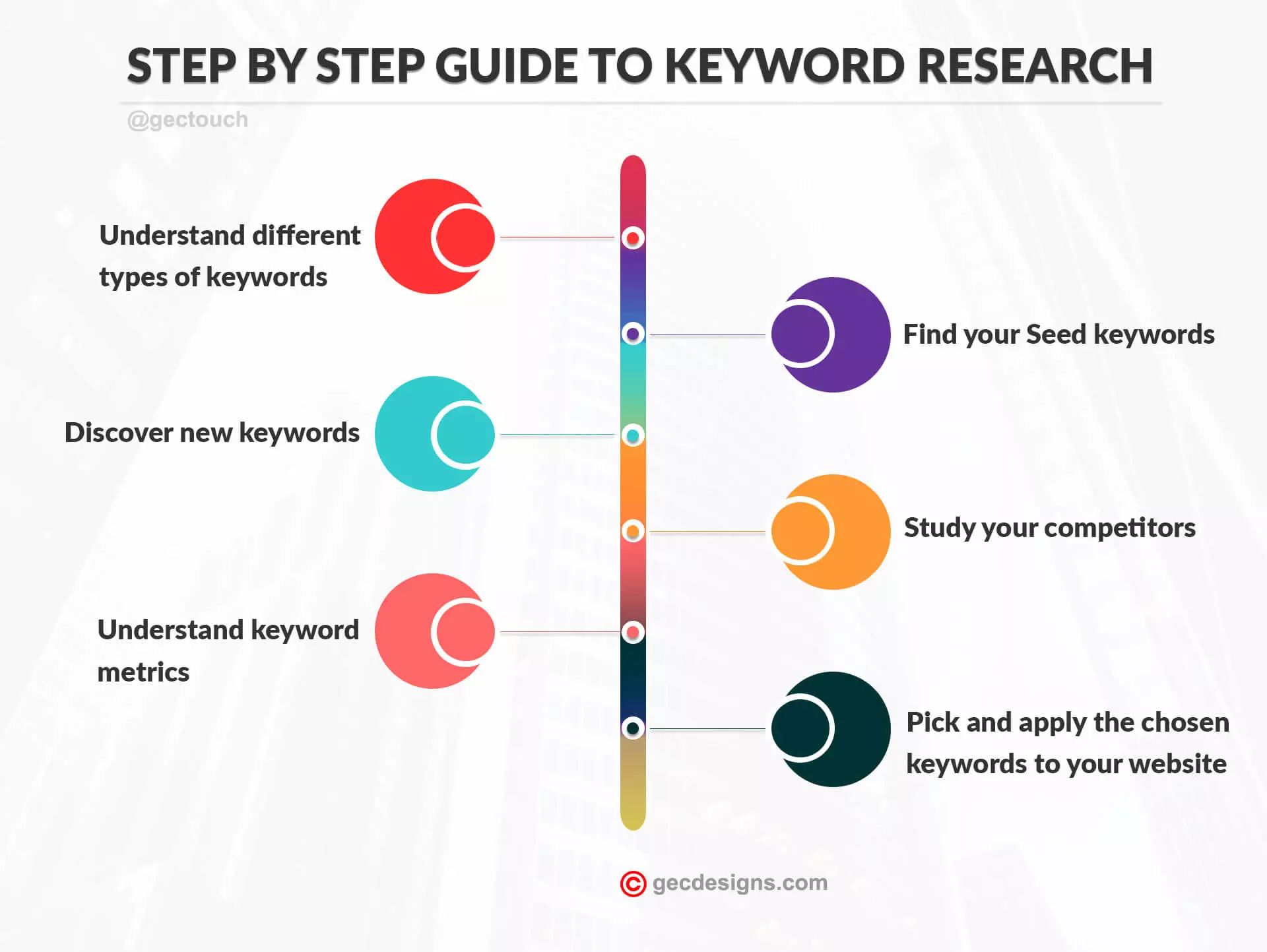
Credit: gecdesigns.com
Implementing Keywords In Content
Once you have identified the right keywords, the next step is crucial: implementing them effectively in your content. Proper keyword integration can boost your search engine rankings and attract more organic traffic. Here, we will explore strategies for on-page optimization and content creation that can help you maximize the impact of your chosen keywords.
On-page Optimization
On-page optimization involves placing keywords strategically within your web pages. This makes your content more relevant to search engines.
- Title Tags: Include your primary keyword in the title tag.
- Meta Descriptions: Use your primary keyword in a compelling meta description.
- Headers: Place keywords in H1, H2, and H3 tags.
- URL: Make sure the URL contains your primary keyword.
- Alt Text: Use keywords in image alt texts.
Content Creation Strategies
Content creation is where you can truly shine with your keyword implementation. Your goal is to create valuable, keyword-rich content that answers users’ queries.
- Keyword Density: Maintain a keyword density of 1-2%.
- Synonyms: Use synonyms and related terms to avoid keyword stuffing.
- LSI Keywords: Incorporate Latent Semantic Indexing (LSI) keywords.
- Internal Links: Link to other pages using keyword-rich anchor texts.
- External Links: Link to reputable sources to add value to your content.
Here’s a quick reference table for easy understanding:
| Element | Optimization Strategy |
|---|---|
| Title Tags | Include primary keyword |
| Meta Descriptions | Use primary keyword |
| Headers | Place keywords in H1, H2, H3 tags |
| URL | Contain primary keyword |
| Alt Text | Use keywords in image alt texts |
Monitoring And Updating Keywords
Monitoring and updating keywords is a crucial part of SEO. It helps ensure that your content remains relevant and competitive. This step involves tracking the performance of your keywords and making necessary adjustments.
Tracking Performance
It’s important to keep an eye on how your keywords perform. Use tools like Google Analytics and SEMrush. These tools can show you which keywords bring the most traffic. Also, they can highlight which keywords are underperforming.
Set up a regular schedule to review your keyword performance. You can do this weekly or monthly. Make sure to track the following metrics:
- Search volume
- Click-through rate (CTR)
- Conversion rate
- Average position in search results
Adjusting Strategies
Based on the performance data, you may need to adjust your strategies. If a keyword is not performing well, consider finding a better alternative. You can use tools like Ahrefs or Moz to discover new keywords.
Here are some steps to adjust your keyword strategy:
- Identify underperforming keywords
- Find new, more relevant keywords
- Update your content to include these new keywords
Keep your content fresh and updated. This will help maintain its relevance and improve your search rankings. Regularly updating your keywords ensures your SEO strategy remains effective.
| Metric | Importance |
|---|---|
| Search Volume | Shows keyword popularity |
| CTR | Indicates user interest |
| Conversion Rate | Measures effectiveness |
| Average Position | Shows ranking performance |

Credit: www.shoutmeloud.com
Common Keyword Research Mistakes
Effective keyword research is crucial for SEO success. Many often make avoidable mistakes. These errors can hinder your site’s performance. Avoid these common keyword research mistakes to improve your SEO strategy.
Ignoring Long-tail Keywords
Many focus only on high-volume keywords. They ignore long-tail keywords which are specific and less competitive. These keywords often have higher conversion rates. They target more specific user queries. For example:
- High-volume keyword: “running shoes”
- Long-tail keyword: “best running shoes for flat feet”
Avoiding long-tail keywords can limit your reach. They attract users with precise needs. They also face less competition. Use tools like Google Keyword Planner to find them.
Overlooking User Intent
Understanding user intent is vital. Users search with specific intentions. These can be informational, navigational, or transactional. Matching your keywords to user intent can improve engagement.
| Intent Type | Description | Example Keywords |
|---|---|---|
| Informational | Searching for information | How to tie a tie |
| Navigational | Searching for a specific site | Facebook login |
| Transactional | Ready to make a purchase | Buy iPhone 13 |
Ignoring user intent can lead to high bounce rates. Visitors leave if content doesn’t match their needs. Analyze search intent for better keyword targeting. Use tools like SEMrush or Ahrefs for insights.
Advanced Keyword Research Techniques
Advanced keyword research techniques can significantly enhance your SEO strategy. Using these methods, you can find better opportunities and gain a competitive edge. Here are some advanced techniques to consider.
Utilizing Serp Features
Search Engine Results Pages (SERPs) offer rich insights. They display various features like featured snippets, knowledge panels, and people also ask sections. These features can help identify valuable keywords.
To use SERP features:
- Analyze the top-ranking pages.
- Identify keywords in featured snippets.
- Check related questions in the people also ask section.
Optimizing for these keywords can improve your chances of appearing in SERP features.
Voice Search Optimization
Voice search is growing rapidly. People use natural language when speaking to voice assistants. Optimizing for voice search can help you reach a broader audience.
To optimize for voice search:
- Focus on long-tail keywords.
- Use conversational phrases.
- Include question-based keywords.
For example, instead of “best pizza NYC,” use “Where can I find the best pizza in NYC?”. This matches the natural language used in voice searches.
Frequently Asked Questions
What Is Keyword Research In Seo?
Keyword research in SEO involves finding and analyzing search terms. These terms help improve website visibility on search engines.
Why Is Keyword Research Important For Seo?
Keyword research is crucial for SEO. It helps identify popular search terms. This can increase website traffic and improve rankings.
How Do I Find The Best Keywords?
To find the best keywords, use tools like Google Keyword Planner. Analyze competitors and search trends for effective keywords.
What Are Long-tail Keywords?
Long-tail keywords are longer, specific search phrases. They have lower competition and can attract highly targeted traffic.
Conclusion
Mastering keyword research is crucial for SEO success. It helps drive organic traffic and improve search rankings. Use tools and analytics to find effective keywords. Consistently update your strategy to stay ahead. Implement these tips to enhance your website’s visibility and attract your target audience.
Happy optimizing!