
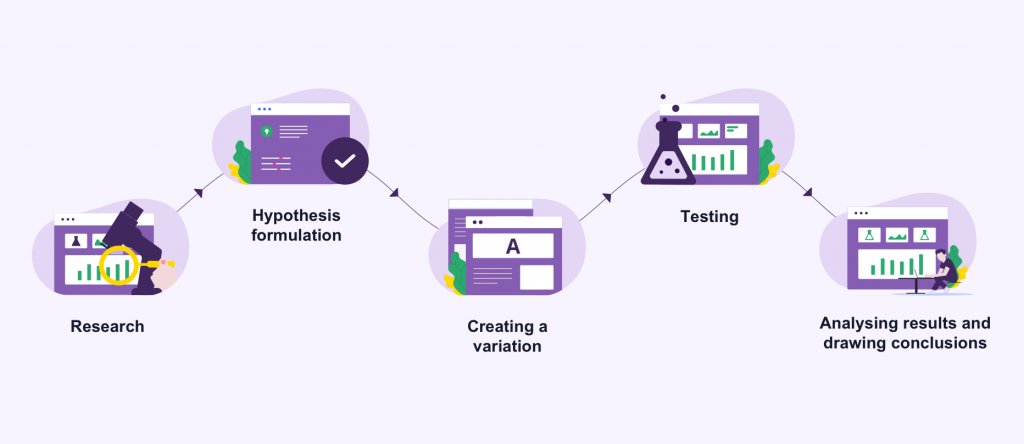
A/B testing compares two versions of a webpage or app to see which performs better. It helps optimize user experience and conversion rates.
A/B testing, also known as split testing, is a powerful method for improving digital performance. By comparing two versions of a webpage or app, businesses can identify which version yields better results. This approach is essential for optimizing elements like headlines, images, call-to-action buttons, and overall design.
Data-driven decisions made through A/B testing lead to increased user engagement and higher conversion rates. The simplicity of the method allows for continuous improvement and fine-tuning. Marketers and developers benefit from actionable insights, making A/B testing a cornerstone of successful digital strategies.
Introduction To A/b Testing
A/B testing is a powerful tool for digital marketers. It helps improve website performance. This method involves comparing two versions of a webpage. The goal is to see which one performs better. This process is crucial for data-driven decisions.
What Is A/b Testing?
A/B testing is a method to test two versions of a webpage. Version A is the original. Version B is the modified version. Users are split into two groups. One group sees version A. The other sees version B. Results are then compared to see which performs better.
Importance Of A/b Testing
A/B testing is important for many reasons:
- It helps improve conversion rates.
- It provides data-driven insights.
- It reduces bounce rates.
- It enhances user experience.
These benefits lead to better business outcomes.
| Benefits | Impact |
|---|---|
| Higher Conversion Rates | More sales and sign-ups |
| Improved User Experience | Happier visitors |
| Data-Driven Decisions | More effective strategies |
Use A/B testing to make informed changes to your website. This ensures better engagement and results.
Setting Up Your A/b Test
Setting up an A/B test helps to improve your website performance. This method compares two versions of a webpage to see which performs better. Follow these steps to set up an A/B test successfully.
Choosing Variables
First, decide what you want to test. Variables could include:
- Headlines
- Call-to-action buttons
- Images
- Product descriptions
Choose only one variable to test at a time. This keeps results clear and actionable.
Defining Goals
Next, set clear goals for your A/B test. Goals help measure success. Common goals include:
| Goal | Description |
|---|---|
| Conversion Rate | Percentage of visitors who complete a desired action. |
| Bounce Rate | Percentage of visitors who leave after viewing one page. |
| Click-Through Rate | Percentage of visitors who click a specific link. |
Make sure your goals are specific, measurable, achievable, relevant, and time-bound (SMART).
Designing Your Experiment
Creating a successful A/B test requires careful planning and attention. The design phase is crucial. It helps ensure accurate and meaningful results. In this section, you will learn how to create variations and ensure randomization.
Creating Variations
Creating variations is the heart of any A/B test. You need at least two different versions: Version A and Version B. Version A is usually the original. Version B has the change you want to test.
Common elements to test include:
- Headlines
- Call-to-action buttons
- Images
- Layout
- Content
Make sure the changes are significant enough to measure. Small tweaks may not show clear results. Use tools like Google Optimize or Optimizely to create these variations easily.
Ensuring Randomization
Ensuring randomization is critical for the validity of your A/B test. Randomization helps eliminate bias. It ensures each user has an equal chance of seeing either version.
Here’s how to ensure randomization:
- Use a random number generator.
- Employ A/B testing tools that handle randomization.
- Split users based on unique identifiers like cookies or IDs.
Most A/B testing tools automate this process. They randomly assign users to different versions. This ensures the results are reliable and accurate.
Remember, the goal of randomization is to distribute users evenly. This makes the test fair and the results trustworthy.
Credit: vwo.com
Tools For A/b Testing
Choosing the right tools for A/B Testing can significantly impact your results. Various platforms offer unique features to help you run effective tests. In this section, we will explore popular platforms and the criteria for selecting the best tool for your needs.
Popular Platforms
Several popular platforms are available to assist with A/B Testing:
- Google Optimize: Easy to use and integrates with Google Analytics.
- Optimizely: Advanced targeting and real-time reporting features.
- VWO (Visual Website Optimizer): User-friendly interface and heatmap analysis.
- Adobe Target: Personalization capabilities and robust analytics.
- AB Tasty: Offers a wide range of testing options and integrations.
Criteria For Selection
Selecting the right tool involves considering several key criteria:
- Ease of Use: Ensure the platform is user-friendly and intuitive.
- Integration: Check compatibility with your existing analytics tools.
- Features: Look for features like segmentation, targeting, and reporting.
- Cost: Evaluate the pricing to ensure it fits your budget.
- Support: Ensure the platform offers reliable customer support.
Here is a table summarizing the features of popular A/B Testing tools:
| Platform | Ease of Use | Integration | Features | Cost | Support |
|---|---|---|---|---|---|
| Google Optimize | High | Excellent | Basic | Free | Good |
| Optimizely | Medium | Excellent | Advanced | High | Excellent |
| VWO | High | Good | Advanced | Medium | Good |
| Adobe Target | Medium | Excellent | Advanced | High | Excellent |
| AB Tasty | High | Good | Advanced | Medium | Good |
Analyzing Results
After running an A/B test, analyzing results is crucial. This step helps in understanding the performance of different variations.
Interpreting Data
Interpreting data means looking at the results from your A/B test. Focus on key metrics like conversion rate, bounce rate, and time on page.
Use tables or charts to make data easier to understand. Below is a sample table to compare metrics between two variations:
| Metric | Variation A | Variation B |
|---|---|---|
| Conversion Rate | 5% | 7% |
| Bounce Rate | 50% | 45% |
| Time on Page | 2 min | 3 min |
Statistical Significance
Statistical significance tells if the results are by chance or real. A common threshold is 95% confidence level. Tools like Google Optimize can help calculate this.
Follow these steps for checking statistical significance:
- Collect data from your A/B test.
- Use a statistical significance calculator.
- Input your data into the calculator.
- Check if the p-value is less than 0.05.
If the p-value is less than 0.05, your results are statistically significant. This means you can trust the data.
Remember to run tests long enough to get reliable data. Short tests might not give accurate results.
Credit: www.kameleoon.com
Common Pitfalls
A/B testing is a powerful tool for optimizing performance. Yet, many fall into common traps. These pitfalls can skew results and lead to wrong decisions. Let’s explore some of these pitfalls.
Sample Size Issues
One common pitfall is using an inadequate sample size. A small sample can lead to unreliable results. This is because the sample may not represent the entire population.
To avoid this, calculate the required sample size before starting the test. Use online calculators to determine the right sample size. Make sure the sample is large enough to detect differences.
Important factors for sample size include:
- Desired confidence level
- Expected effect size
- Population variance
These factors help in choosing the correct sample size. Always ensure your sample size is sufficient for reliable results.
Bias And Confounding Factors
Bias can distort A/B testing results. Bias occurs when there’s a systematic error. This error affects the comparison between the two groups.
Common sources of bias include:
- Selection bias
- Measurement bias
- Response bias
Confounding factors are another issue. These are variables that influence both the dependent and independent variables.
To minimize bias and confounding factors, consider the following:
- Randomly assign participants to groups
- Ensure the test environment is consistent
- Control for external variables
By addressing these issues, you can improve the reliability of your A/B tests. This leads to more accurate and actionable insights.
Case Studies
Case studies reveal the power of A/B testing. They show real-world applications and results. These studies help us understand what works and what doesn’t.
Successful A/b Tests
Many companies have seen success through A/B testing. Let’s explore a few examples.
- Company A: Increased conversions by 30% with a new call-to-action button.
- Company B: Boosted email open rates by 20% with a different subject line.
- Company C: Improved user engagement by 25% by changing the homepage layout.
| Company | Change Implemented | Result |
|---|---|---|
| Company A | New call-to-action button | 30% increase in conversions |
| Company B | Different email subject line | 20% boost in open rates |
| Company C | New homepage layout | 25% improvement in engagement |
Lessons Learned
Each test teaches valuable lessons. Here are some key takeaways:
- Small changes can make a big difference. Like a new button color.
- Test one element at a time. This ensures clear results.
- Continuous testing is crucial. Trends and user preferences change.
- Analyze data thoroughly. Look beyond the surface.
These case studies highlight the importance of A/B testing. They show it’s a powerful tool for growth.
Best Practices
A/B testing is a powerful tool for optimizing your website. Following best practices ensures accurate and meaningful results. Below are some key practices to follow.
Iterative Testing
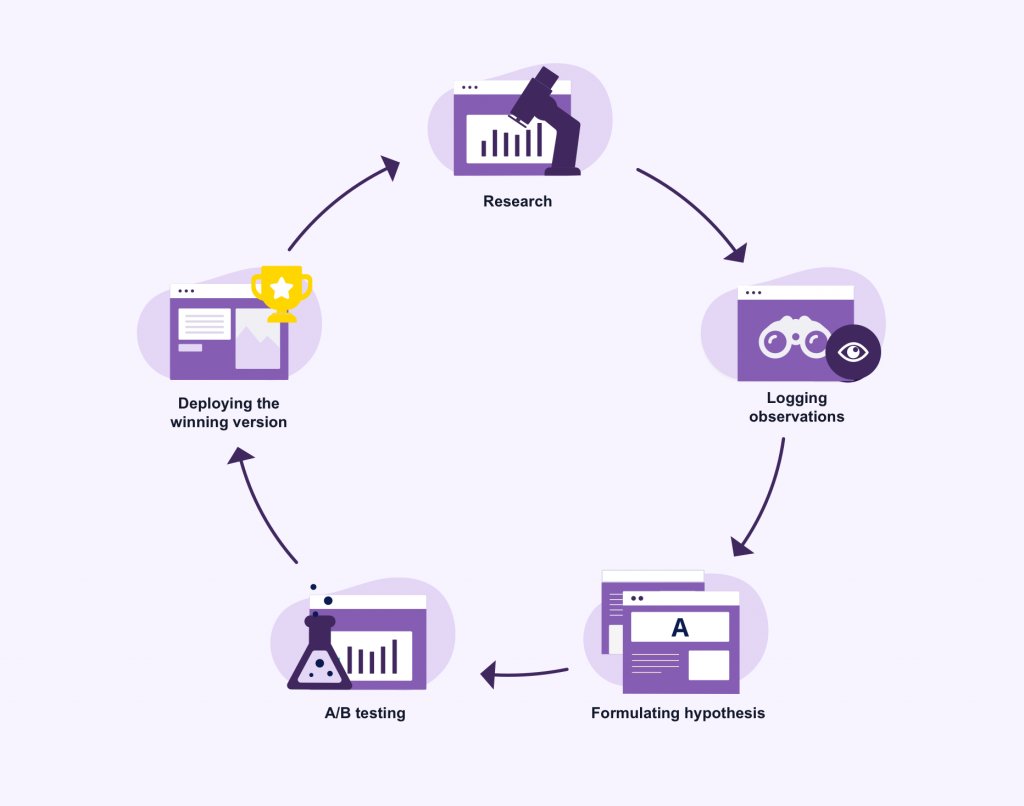
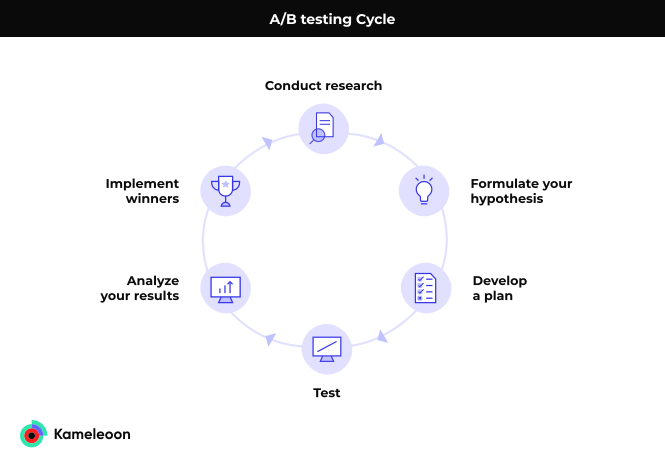
Always conduct iterative testing. Start with a hypothesis and test it with a small change. If the test is successful, implement the change and test again. This method helps in understanding the impact of each change.
Use the scientific method for your tests:
- Formulate a hypothesis
- Run the test
- Analyze the results
- Implement the winning variant
- Repeat with a new hypothesis
Documenting Findings
Documenting findings is crucial. It helps in keeping track of what works and what doesn’t.
Create a test log to record:
| Test ID | Hypothesis | Variant A | Variant B | Result | Next Steps |
|---|---|---|---|---|---|
| 1 | Change button color | Red | Blue | Blue wins | Implement blue button |
| 2 | Change headline | Buy Now | Get Yours | Buy Now wins | Implement Buy Now |
Regularly review your test log. This helps in making informed decisions based on past data.
Future Trends
A/B testing is evolving rapidly. With advancements in technology, new trends are emerging. These trends promise to make testing more efficient and insightful. Let’s explore some of the most significant future trends.
Ai And Machine Learning
Artificial Intelligence (AI) and Machine Learning (ML) are transforming A/B testing. AI can analyze vast amounts of data quickly. This leads to faster and more accurate results.
AI algorithms can predict user behavior. This helps in designing better tests. They can also identify patterns that humans might miss. Here are some key benefits:
- Improved accuracy
- Faster data processing
- Better user experience predictions
ML models can learn from past tests. This means they get smarter over time. They can suggest the best variations to test. This makes A/B testing more efficient and effective.
Personalization
Personalization is becoming crucial in A/B testing. Users expect experiences tailored to their preferences. Personalized A/B testing can help achieve this.
By segmenting users based on behavior, tests can be more relevant. This can lead to higher conversion rates. Here are some ways to implement personalization in A/B testing:
- Segment users based on demographics
- Use behavior data to create personalized experiences
- Test different content for different user segments
Personalization tools can make this process easier. They can automate the segmentation process. This ensures each user gets the most relevant experience.
| Trend | Benefit |
|---|---|
| AI and Machine Learning | Improved accuracy, faster results |
| Personalization | Higher conversion rates, better user experience |
Embracing these trends can enhance your A/B testing efforts. They can provide deeper insights and more significant results. Stay ahead by adopting these innovative methods.

Credit: en.wikipedia.org
Frequently Asked Questions
What Is A/b Testing?
A/B testing is a method comparing two versions of a webpage or app. It helps determine which version performs better. This technique is essential for optimizing user experience and increasing conversions.
How Does A/b Testing Work?
A/B testing splits your audience into two groups. One group sees version A, and the other sees version B. You then compare performance metrics to decide which version is more effective.
Why Is A/b Testing Important?
A/B testing helps improve your website’s performance. It provides data-driven insights. These insights can enhance user experience and increase conversion rates. This leads to better business outcomes.
What Are Common A/b Testing Methods?
Common methods include split URL testing, multivariate testing, and redirect tests. Each has its unique benefits. Choose based on your specific needs and goals.
Conclusion
Mastering A/B testing methods can significantly boost your business success. Implement these strategies to optimize user experience and increase conversions. Continuous testing and analysis are key. Stay ahead by regularly updating your methods. Start experimenting today and watch your metrics improve.