

To create a lead magnet, identify your target audience’s pain points and offer a valuable, relevant solution. Ensure it is easily accessible and promotes immediate action.
A lead magnethttps://flowdigita.com/how-to-create-a-lead-magnet/ is an effective tool to attract potential customers by offering them something valuable in exchange for their contact information. It could be an e-book, a checklist, a free trial, or a discount code. The key to a successful lead magnet lies in understanding your audience’s needs and delivering a solution that addresses those needs directly.
This helps to build trust and positions your brand as a valuable resource. By creating compelling content that speaks to your audience’s challenges, you can generate quality leads and nurture them into loyal customers.

Credit: adoric.com
Introduction To Lead Magnets
Create a lead magnet is a powerful way to attract potential customers. A lead magnet provides value, capturing interest and contact information.
What Is A Lead Magnet?
A lead magnet is a valuable resource given in exchange for contact details. It can be an eBook, a free trial, or a discount code.
Lead magnets help build an email list. This list is crucial for marketing efforts. They offer something the audience finds useful.
Importance Of Lead Magnets
Lead magnets are essential for business growth. They attract potential customers and provide a way to nurture leads.
By offering something valuable, businesses gain trust. This trust can convert leads into loyal customers.
| Benefit | Description |
|---|---|
| Builds Trust | Provides value, establishing credibility. |
| Grows Email List | Collects contact information for future marketing. |
| Increases Engagement | Encourages interaction with your brand. |
Lead magnets are a vital part of any marketing strategy. They help convert visitors into leads, and leads into customers.
Identifying Your Audience
Identifying your audience is the first step in creating an effective lead magnet. Knowing who you are targeting helps you tailor your content to their needs and interests. This ensures that your lead magnet attracts the right people and converts them into leads.
Knowing Your Target Market
Understanding your target market is crucial for creating a compelling lead magnet. This involves researching the demographics, interests, and pain points of your potential customers.
- Demographics: Age, gender, location, income, and education level.
- Interests: Hobbies, preferences, and behaviors.
- Pain Points: Challenges and problems they face.
Use surveys, interviews, and analytics to gather this information. This data will help you create a lead magnet that resonates with your audience.
Creating Buyer Personas
Creating buyer personas helps you visualize and understand your audience better. A buyer persona is a detailed profile of your ideal customer.
Here is a simple table to create a buyer persona:
| Attribute | Details |
|---|---|
| Name | John Doe |
| Age | 30 |
| Job Title | Marketing Manager |
| Goals | Increase brand awareness |
| Challenges | Limited budget |
Use these personas to guide your content creation. Ensure your lead magnet addresses their goals and challenges.
With a clear understanding of your audience and detailed buyer personas, you can create a lead magnet that speaks directly to your target market. This will increase your chances of converting visitors into leads.
Choosing The Right Type Of Lead Magnet
Create a lead magnet can grow your email list quickly. But how do you choose the right type? The right lead magnet should attract your target audience. It should also provide value and solve a problem. Here are some types to consider.
eBooks And Guides
eBooks and guides are excellent for providing detailed information. They can cover a topic in-depth, making them valuable resources. eBooks and guides can be downloaded and kept for future reference. They also establish you as an expert in your field.
- Comprehensive content
- High perceived value
- Establishes authority
Checklists And Cheat Sheets
Checklists and cheat sheets are perfect for quick wins. They provide step-by-step instructions or tips. These are easy to create and consume. Users love them because they are practical and actionable.
- Quick to create
- Easy to digest
- Highly practical
| Type | Benefits |
|---|---|
| Ebooks and Guides | In-depth content, establishes authority |
| Checklists and Cheat Sheets | Quick to create, easy to use |

Credit: www.bourboncreative.com
Crafting Irresistible Content
Create a lead magnet that grabs attention requires irresistible content. You need to connect with your audience on a deeper level. This involves understanding their needs, addressing their pain points, and offering practical solutions. Let’s break it down step by step.
Addressing Pain Points
Identify the common problems your audience faces. These are their pain points. Use surveys, feedback forms, and social media to gather information. Create a list of the most pressing issues. Here’s an example:
| Pain Point | Description |
|---|---|
| Time Management | Struggling to complete tasks on time. |
| Budgeting | Difficulty in managing finances effectively. |
| Health | Finding it hard to maintain a healthy lifestyle. |
Once you have this list, focus on creating content that addresses these issues. Speak directly to the pain points. Use clear and simple language. Keep your sentences short and impactful.
Offering Solutions
Your audience seeks answers to their problems. Offer practical and actionable solutions. Provide steps they can take immediately. Use bullet points for clarity:
- Provide a step-by-step guide to solve their issue.
- Offer tips and tricks that are easy to implement.
- Include real-life examples and case studies.
Ensure your solutions are easy to understand. Avoid jargon and technical terms. Use visuals like infographics and charts to illustrate your points. Here’s an example of a simple action plan:
- Identify the problem.
- Break it down into smaller tasks.
- Set achievable goals.
- Track progress regularly.
By addressing pain points and offering solutions, you create content that resonates. This makes your lead magnet irresistible and highly effective.
Design And Presentation
Design and presentation are crucial for creating a compelling lead magnet. A well-designed lead magnet grabs attention and keeps users engaged. Below are key aspects you should focus on to enhance the visual appeal and user-friendly layout of your lead magnet.
Visual Appeal
Visual appeal is essential for making a strong first impression. Use high-quality images and graphics. Choose a color scheme that aligns with your brand. This creates a cohesive look and feel. Fonts should be easy to read and consistent throughout the document.
- High-quality images
- Consistent color scheme
- Readable fonts
Charts and infographics can also enhance visual appeal. They make complex information easier to digest. They also break up text and add variety.
| Element | Tip |
|---|---|
| Images | Use high-resolution images |
| Colors | Stick to your brand colors |
| Fonts | Ensure readability |
User-friendly Layout
A user-friendly layout makes your lead magnet easy to navigate. Use headings and subheadings to organize content. This helps readers find information quickly.
- Use headings and subheadings
- Keep paragraphs short
- Include bullet points
White space is your friend. It makes the document less cluttered. Include margins and padding to give text breathing room. This improves readability.
Interactive elements like clickable links and buttons can also enhance user experience. They guide users through the content smoothly. Ensure all links work properly to avoid frustration.
Design and presentation are the keys to a successful lead magnet. Focus on visual appeal and a user-friendly layout to engage and retain your audience.
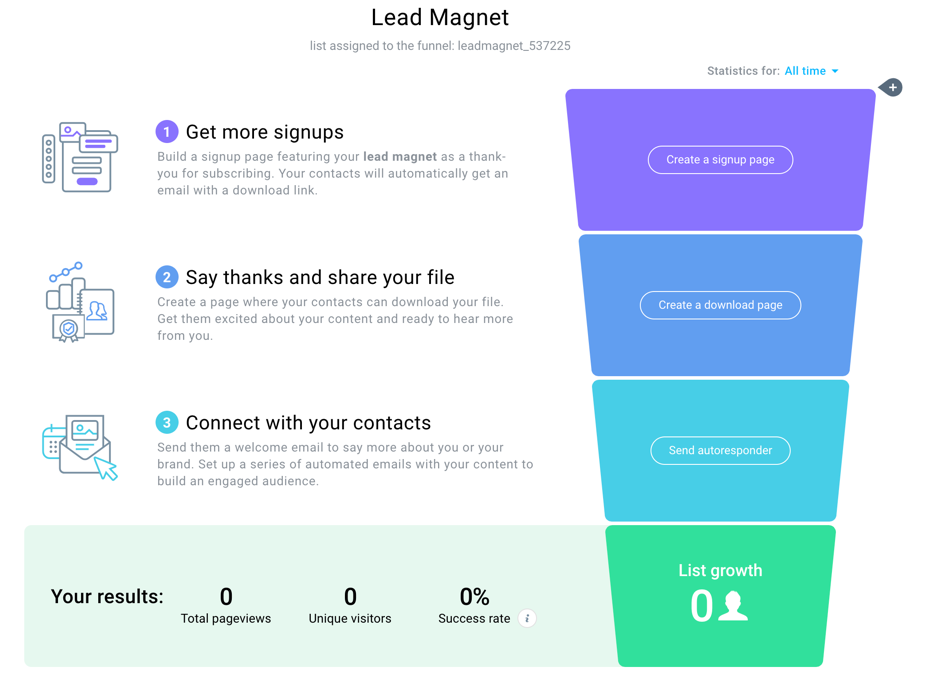
Credit: www.getresponse.com
Promoting Your Lead Magnet
Create a lead magnet is only the first step. To see real results, you need to promote it effectively. Below, find essential strategies to ensure your lead magnet reaches the right audience and converts visitors into leads.
Social Media Strategies
Social media is a powerful tool for promoting your lead magnet. Here are some ways to use it:
- Share your lead magnet on all your social media profiles.
- Use eye-catching images and engaging captions.
- Post at times when your audience is most active.
- Join relevant groups and forums to share your lead magnet.
- Encourage your followers to share the lead magnet with their networks.
Email Marketing Tactics
Email marketing is another effective way to promote your lead magnet. Use these tactics:
- Send a dedicated email to your subscriber list about the lead magnet.
- Include a strong call-to-action in the email.
- Use compelling subject lines to increase open rates.
- Add a link to the lead magnet in your email signature.
- Segment your email list to target specific groups.
By using these strategies, you can ensure your lead magnet reaches its full potential. Promote it well, and watch your leads grow.
Measuring Success
Create a lead magnet is only the first step. Measuring its success is equally important. Understanding how well your lead magnet performs helps refine your strategy. It ensures you attract high-quality leads. Let’s delve into the key performance indicators and conversion rates to track your lead magnet’s success.
Key Performance Indicators
Key Performance Indicators (KPIs) are essential metrics. They help you gauge the effectiveness of your lead magnet. Here are some important KPIs to monitor:
- Conversion Rate: The percentage of visitors who become leads.
- Click-Through Rate (CTR): The ratio of users who click a link to the number of total users who view a page.
- Lead Quality: Measures the potential of leads to convert into customers.
- Engagement Rate: Indicates how actively leads interact with your content.
- Retention Rate: The percentage of leads who stay engaged over time.
Analyzing Conversion Rates
Analyzing conversion rates helps you understand your lead magnet’s success. Follow these steps to analyze conversion rates effectively:
- Track the number of visitors to your landing page.
- Count the number of visitors who complete the lead form.
- Calculate the conversion rate using this formula:
Conversion Rate = (Number of Leads / Number of Visitors) 100
For example, if your landing page had 500 visitors and 50 leads, your conversion rate is:
Conversion Rate = (50 / 500) 100 = 10%
Use tools like Google Analytics to track these metrics. Regular analysis helps you identify areas for improvement. It ensures your lead magnet continues to attract high-quality leads.
Optimizing Your Lead Magnet
Create a lead magnet is just the beginning. To truly capture and convert leads, continuous optimization is crucial. This involves fine-tuning elements to ensure maximum engagement and conversion rates. Let’s delve into two key strategies for optimizing your lead magnet.
A/b Testing
A/B testing is a powerful tool for optimization. It involves creating two versions of your lead magnet to see which performs better. Here’s how you can implement it:
- Create two versions of your lead magnet. Keep one as the control version.
- Change one element in the second version. This could be the headline, image, or call-to-action.
- Split your audience into two groups. Show each group a different version.
- Measure the performance of each version. Look at metrics like click-through rate, conversion rate, and engagement.
- Choose the version with better performance. Implement this version as your primary lead magnet.
Iterative Improvements
Continuous improvement is key to optimizing your lead magnet. This involves making small, gradual changes and measuring their impact. Here are some steps to follow:
- Collect feedback from your audience. Ask them what they like or dislike about your lead magnet.
- Analyze the data. Look for patterns or common issues mentioned by users.
- Make small changes based on feedback. Adjust elements like design, content, or delivery method.
- Test these changes. See how they impact your lead magnet’s performance.
- Repeat the process. Continuous iteration ensures your lead magnet stays effective.
By focusing on A/B testing and iterative improvements, you can optimize your lead magnet for maximum impact. Remember, small changes can lead to big results.
Frequently Asked Questions
What Is A Lead Magnet?
A lead magnet is a free resource offered to potential customers. It aims to capture their contact information. It can be an eBook, checklist, or webinar.
Why Use A Lead Magnet?
A lead magnet helps grow your email list. It attracts potential customers by offering them valuable content. This can increase your conversion rates.
How Do I Create A Lead Magnet?
Start by identifying your audience’s needs. Create valuable content that addresses these needs. Design it professionally and promote it on your website.
What Makes A Good Lead Magnet?
A good lead magnet is highly relevant to your audience. It should solve a problem or provide valuable insights. It must be easy to access and consume.
Conclusion
Crafting an effective lead magnet is crucial for capturing potential customers. Focus on providing value and solving problems. Use compelling headlines and clear calls to action. Test different formats to see what works best for your audience. Implement these strategies to boost your lead generation efforts and grow your business.