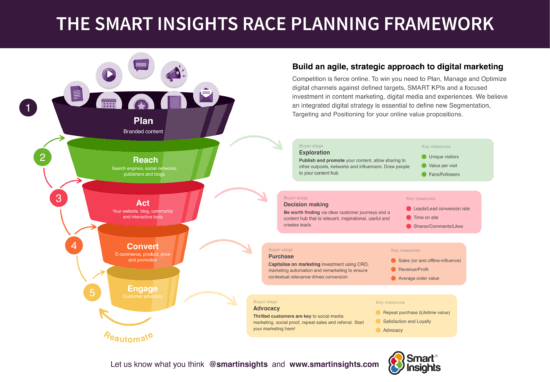
A digital marketing strategy involves leveraging online channels to promote products or services and achieve business goals. It includes tactics like SEO, social media, and email marketing.
Creating an effective digital marketing strategy is crucial for business success in the modern age. It starts with identifying your target audience and understanding their needs. You then select the appropriate online channels to engage with them effectively. Search engine optimization (SEO) helps improve your website’s visibility on search engines.
Social media marketing allows direct interaction with your audience and builds brand loyalty. Email marketing nurtures leads and keeps customers informed about your offerings. Each element of your strategy should align with your overall business objectives, ensuring a cohesive and impactful approach.
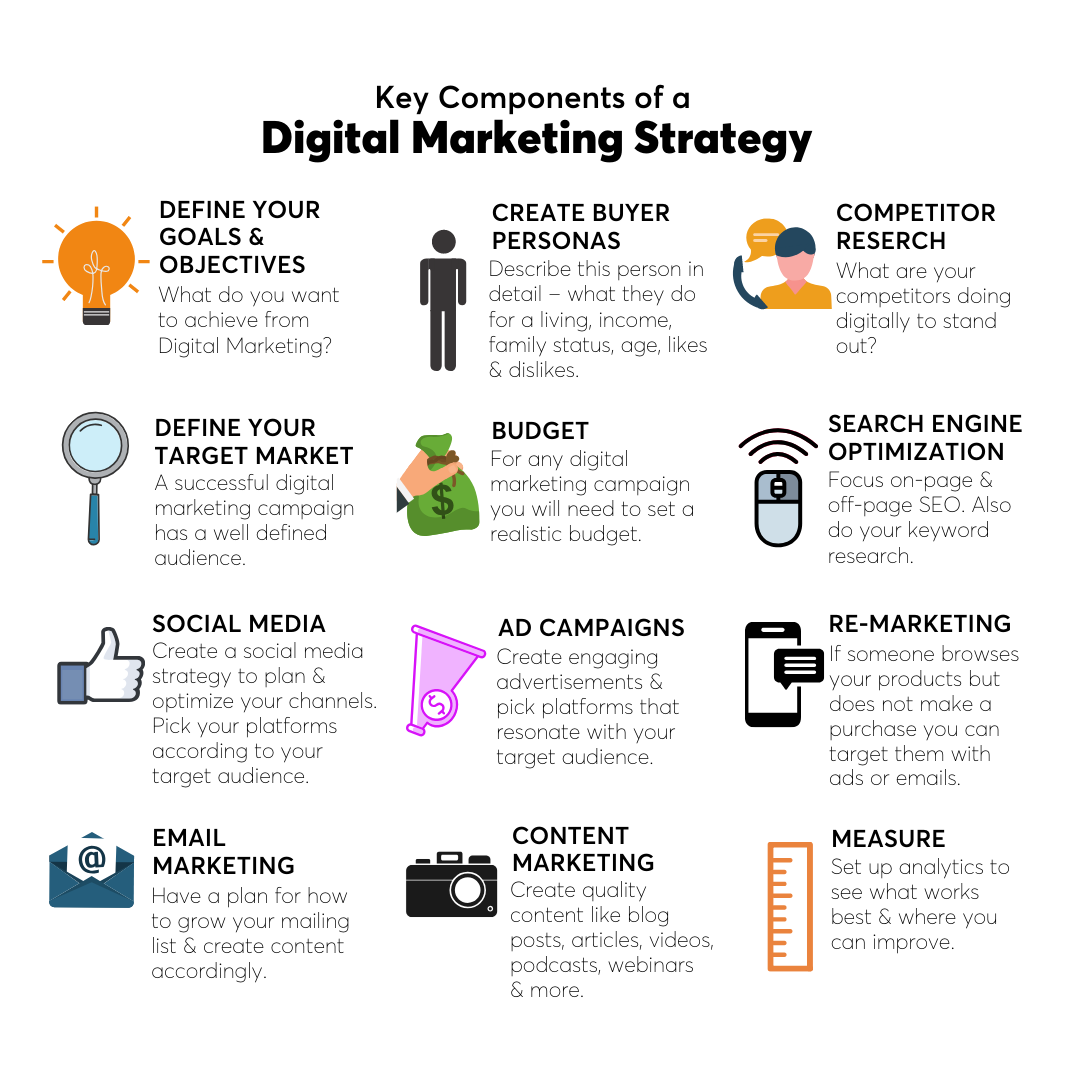
Credit: www.boldxcollective.com
Introduction To Digital Marketing
Digital marketing has transformed how businesses reach their audience. In the internet era, having a digital marketing strategy is crucial. This section introduces the basic concepts and importance of digital marketing.
What Is Digital Marketing?
Digital marketing involves promoting products or services through digital channels. These channels include websites, social media, email, and search engines. Digital marketing uses online platforms to connect with customers. It helps businesses reach a larger audience quickly and efficiently.
Here are some key components of digital marketing:
- Search Engine Optimization (SEO): Improving website visibility on search engines.
- Content Marketing: Creating valuable content to attract and engage users.
- Social Media Marketing: Using social platforms to promote products.
- Email Marketing: Sending targeted emails to potential customers.
- Pay-Per-Click (PPC): Paid advertising to drive traffic to websites.
Importance Of Online Presence
An online presence is vital for modern businesses. It allows potential customers to find your brand easily. A strong online presence builds credibility and trust. It also provides a platform for customer engagement and feedback.
Consider these benefits of a solid online presence:
| Benefit | Description |
|---|---|
| Increased Visibility | More people can find your business online. |
| Brand Awareness | People become familiar with your brand. |
| Customer Engagement | Interact with customers through social media and other platforms. |
| Cost-Effective Marketing | Digital marketing is often cheaper than traditional methods. |
In summary, a well-planned digital marketing strategy is essential. It helps businesses thrive in the competitive online landscape.
Setting Goals
Setting goals is crucial for any digital marketing strategy. Clear goals help you measure success. They guide your efforts and provide direction.
Defining Objectives
Start by defining your objectives. What do you want to achieve? Objectives could include:
- Increasing website traffic
- Boosting social media engagement
- Generating leads
- Improving conversion rates
Make sure your objectives are SMART:
| Criteria | Description |
|---|---|
| Specific | Clear and defined |
| Measurable | Trackable metrics |
| Achievable | Realistic goals |
| Relevant | Aligned with business objectives |
| Time-bound | Set within a timeframe |
Measuring Success
Next, focus on measuring success. Use Key Performance Indicators (KPIs) to track progress. KPIs could include:
- Website visits
- Click-through rates (CTR)
- Bounce rates
- Conversion rates
- Return on investment (ROI)
Use analytics tools like Google Analytics to monitor these metrics. Regularly review your KPIs. Adjust your strategy as needed. This ensures you stay on track and achieve your goals.
Target Audience
In digital marketing, understanding your target audience is crucial. Knowing who they are helps create effective strategies and reach business goals. Let’s dive into how to identify your market and create buyer personas.
Identifying Your Market
To start, you must know who will buy your products or services. This involves researching and analyzing different market segments. Below is a simple approach to help you identify your market:
- Demographics: Age, gender, income, education level
- Geographics: Country, city, rural or urban areas
- Psychographics: Lifestyle, values, interests
- Behavior: Buying habits, brand loyalty, product usage
Use this information to narrow down your audience. It helps in focusing your marketing efforts effectively.
Creating Buyer Personas
Once you know your market, create buyer personas. These are fictional characters representing your ideal customers. Below is a table to help you structure your buyer personas:
| Persona Attribute | Description |
|---|---|
| Name | Give your persona a name to make them real |
| Age | Specify the age range |
| Occupation | What do they do for a living? |
| Interests | List their hobbies and interests |
| Goals | What are they trying to achieve? |
| Challenges | What problems do they face? |
Creating buyer personas helps in personalizing your marketing efforts. It makes your messages more relevant and engaging.
Remember, a well-defined target audience and detailed buyer personas are key to your digital marketing success.

Credit: www.simplilearn.com
Seo Strategies
Effective SEO strategies can significantly boost your digital marketing efforts. By optimizing your website, you can attract more organic traffic. Let’s delve into some essential SEO strategies for your digital marketing plan.
Keyword Research
Keyword research is the foundation of SEO. It helps you understand what your audience is searching for. Use tools like Google Keyword Planner or Ahrefs. These tools can help identify high-traffic keywords. Focus on keywords that are relevant to your business. Here are some steps for effective keyword research:
- Identify primary keywords related to your niche.
- Look for long-tail keywords with low competition.
- Analyze your competitors’ keywords.
- Check the search volume and difficulty of keywords.
Proper keyword research can make your content more discoverable.
On-page Seo Techniques
On-page SEO involves optimizing individual web pages. This helps search engines understand your content. Here are some essential on-page SEO techniques:
| Technique | Description |
|---|---|
| Title Tags | Include your primary keyword in the title. Keep it under 60 characters. |
| Meta Descriptions | Write a compelling meta description. Include your primary keyword. |
| Header Tags | Use H1, H2, and H3 tags to structure your content. |
| Image Alt Text | Provide descriptive alt text for images. Include keywords where relevant. |
| Internal Linking | Link to other relevant pages on your site. This helps with navigation. |
Effective on-page SEO can improve your website’s visibility and user experience.
Content Marketing
Content marketing is the heart of a digital marketing strategy. It involves creating and sharing valuable content. This content attracts and engages your target audience. The goal is to drive profitable customer action.
Types Of Content
There are many types of content you can create. Each type serves a different purpose. Here are some popular content types:
- Blog Posts: Informative articles on various topics.
- Videos: Engaging visual content that tells a story.
- Infographics: Visual representations of data and information.
- eBooks: In-depth guides on specific subjects.
- Podcasts: Audio content that discusses relevant topics.
- Social Media Posts: Short updates and promotions.
Content Distribution Channels
Once your content is ready, you need to distribute it. Use these channels to reach your audience:
- Social Media: Share your content on platforms like Facebook, Twitter, and LinkedIn.
- Email Marketing: Send newsletters to your subscribers.
- Search Engine Optimization (SEO): Optimize your content for search engines.
- Content Syndication: Partner with other websites to share your content.
- Paid Advertising: Use ads to promote your content.
| Content Type | Best Distribution Channel |
|---|---|
| Blog Posts | Social Media, SEO |
| Videos | Social Media, Paid Advertising |
| Infographics | Content Syndication, Social Media |
| eBooks | Email Marketing, SEO |
| Podcasts | SEO, Social Media |
Social Media Marketing
Social Media Marketing is a crucial part of any digital marketing strategy. It helps businesses connect with their audience on various platforms. Effective social media marketing can drive engagement, increase brand awareness, and boost sales.
Platform Selection
Choosing the right social media platform is essential for success. Different platforms cater to different audiences. Below is a table to help you understand which platform might be best for your business:
| Platform | Audience | Content Type |
|---|---|---|
| General Audience | Text, Images, Videos | |
| Younger Audience | Images, Videos | |
| Professionals | Text, Articles | |
| General Audience | Short Text, Images |
Understand your audience before selecting a platform. If your audience is young, Instagram might be ideal. For professionals, LinkedIn could be better.
Engagement Tactics
Engaging your audience is key to a successful social media strategy. Here are some effective tactics:
- Create Interactive Content: Use polls, quizzes, and questions.
- Respond Promptly: Reply to comments and messages quickly.
- Use Hashtags: They help people find your content.
- Post Consistently: Regular posts keep your audience engaged.
Interactive content makes your audience feel involved. Quick responses show that you care about your audience. Hashtags increase your content’s visibility. Consistent posts keep your audience coming back.
Using these tactics, you can build a loyal and engaged audience on social media. This will ultimately help your business grow.
Email Marketing
Email marketing remains one of the most powerful tools in digital marketing. It helps businesses connect directly with their audience. It also drives conversions and fosters customer loyalty.
Building An Email List
Creating a high-quality email list is crucial for any campaign. Collect email addresses from interested users. Use lead magnets like eBooks, whitepapers, or discounts to attract subscribers.
- Offer value through exclusive content.
- Ensure a simple and quick sign-up process.
- Use double opt-in to confirm subscriptions.
A segmented email list can increase engagement. Segment subscribers based on their interests and behaviors. This ensures more personalized and relevant content.
Crafting Effective Campaigns
Effective email campaigns start with strong subject lines. The subject line should grab attention and compel the recipient to open the email. Keep it short and clear.
- Use engaging preheader text.
- Personalize the email content.
- Include clear and compelling call-to-actions (CTAs).
Design your emails to be visually appealing. Use images and a clean layout. Ensure emails are mobile-friendly. Test different elements to find what works best.
| Key Component | Importance |
|---|---|
| Subject Line | High |
| Personalization | High |
| Visuals | Medium |
| CTAs | High |
Analyze your email campaigns regularly. Use metrics like open rates, click-through rates, and conversions. This helps improve future campaigns.
Paid Advertising
Paid Advertising is a powerful tool in digital marketing. It helps drive targeted traffic to your website. This section explores key elements of paid advertising.
Ppc Campaigns
Pay-Per-Click (PPC) campaigns are a popular paid advertising method. With PPC, you pay each time someone clicks your ad. This method allows precise targeting and budget control.
- Keywords: Choose relevant and high-performing keywords.
- Ad Copy: Write engaging and clear ads to attract clicks.
- Landing Pages: Create optimized landing pages for conversions.
- Budget: Set a daily or monthly budget for your campaign.
PPC campaigns can show results quickly. Monitor and adjust your campaigns regularly for the best performance.
Social Media Ads
Social media ads leverage platforms like Facebook, Instagram, and LinkedIn. These ads reach specific audiences based on demographics, interests, and behavior.
| Platform | Audience Targeting | Ad Formats |
|---|---|---|
| Age, location, interests | Image, video, carousel | |
| Age, location, hashtags | Image, video, stories | |
| Job title, industry, skills | Text, image, video |
Social media ads can boost brand awareness. They also drive traffic and generate leads.
- Creative Content: Use high-quality visuals and engaging text.
- Audience Segmentation: Divide your audience into smaller groups.
- Ad Placement: Choose the best places to show your ads.
- Performance Tracking: Measure the success of your ads.
Investing in social media ads can yield high returns. Tailor your ads to your target audience for the best results.
Analytics And Reporting
Analytics and Reporting are crucial for a successful digital marketing strategy. They help you understand what works and what needs improvement. By tracking metrics and adjusting strategies, you can optimize your campaigns effectively.
Tracking Metrics
Tracking metrics is essential for measuring your campaign’s performance. Here are some key metrics to monitor:
- Website Traffic: Monitor the number of visitors to your site.
- Conversion Rate: Track the percentage of visitors who take a desired action.
- Bounce Rate: Measure the percentage of visitors who leave without interacting.
- Engagement Rate: Check how users interact with your content.
- Cost Per Click (CPC): Monitor the cost of each click on your ads.
Use tools like Google Analytics and SEMrush for detailed insights. These tools help you gather data in real-time. This data is vital for making informed decisions.
Adjusting Strategies
Adjusting strategies based on analytics can significantly improve results. Here are steps to follow:
- Identify Weaknesses: Look for areas where performance is lacking.
- Set New Goals: Establish new, achievable goals based on data.
- Implement Changes: Modify your campaigns to address identified issues.
- Test and Monitor: Continuously test new strategies and monitor results.
Regularly adjusting your strategy helps you stay ahead of the competition. It ensures your efforts remain effective and relevant.
| Metric | Description | Importance |
|---|---|---|
| Website Traffic | Number of visitors to your website | High |
| Conversion Rate | Percentage of visitors who convert | High |
| Bounce Rate | Visitors who leave without interaction | Medium |
| Engagement Rate | User interaction with content | High |
| Cost Per Click (CPC) | Cost of each click on ads | Medium |
Future Trends
Digital marketing is ever-evolving. The future promises exciting changes. Businesses must adapt to stay competitive. Understanding future trends is crucial for success. Let’s explore what’s coming.
Emerging Technologies
Artificial Intelligence (AI) is revolutionizing marketing. AI helps in personalized customer experiences. Chatbots provide instant responses and improve user engagement.
Voice Search Optimization is gaining popularity. Devices like Alexa and Google Home are common. Marketers must optimize for voice search queries.
Augmented Reality (AR) enhances user experience. AR allows virtual try-ons and interactive ads. This technology makes shopping more fun.
Below is a table summarizing these technologies:
| Technology | Benefits |
|---|---|
| Artificial Intelligence (AI) | Personalized experiences, better engagement |
| Voice Search Optimization | Improved search visibility, user convenience |
| Augmented Reality (AR) | Interactive ads, enhanced user experience |
Preparing For Change
Businesses must stay updated. Continuous learning is essential. Enroll in digital marketing courses. Follow industry leaders on social media.
Invest in technology. Allocate budget for new tools and platforms. This helps in staying ahead of competitors.
Data analysis is key. Regularly review marketing metrics. Adjust strategies based on data insights.
Here are steps to prepare for change:
- Stay updated with industry trends.
- Invest in the latest technologies.
- Regularly analyze marketing data.
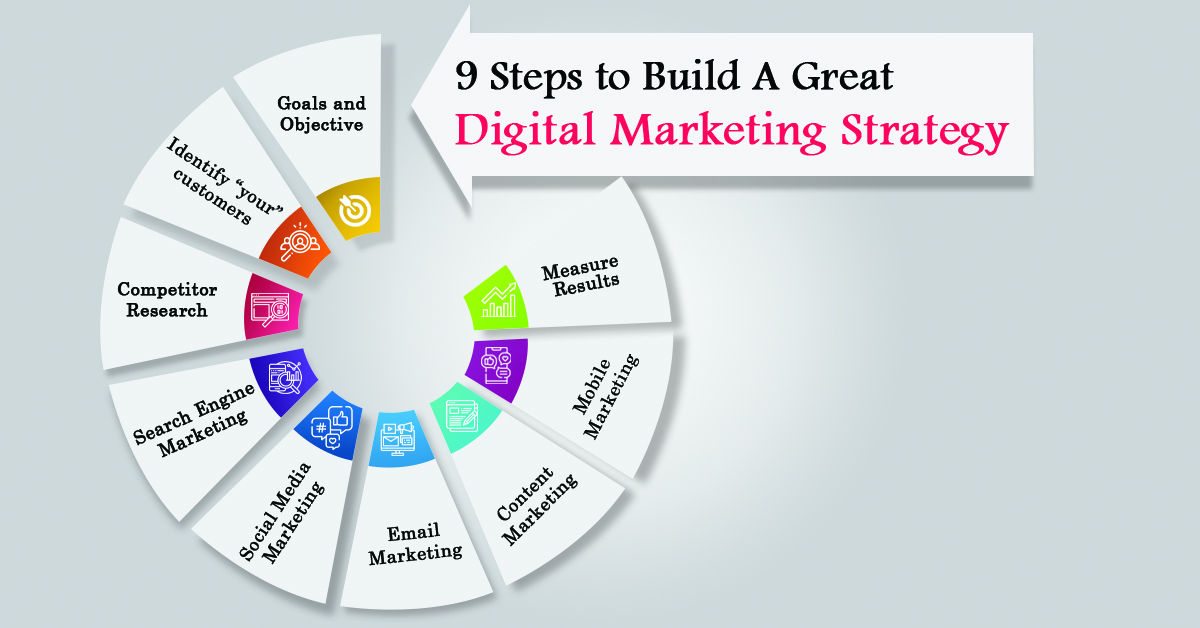
Credit: www.geekschip.com
Frequently Asked Questions
What Is A Digital Marketing Strategy?
A digital marketing strategy is a plan for achieving marketing goals through online channels. It involves tactics like SEO, content marketing, and social media.
Why Is A Digital Marketing Strategy Important?
A digital marketing strategy is crucial for reaching and engaging your target audience. It helps in building brand awareness, driving traffic, and increasing sales.
How Do You Create A Digital Marketing Strategy?
Creating a digital marketing strategy involves understanding your audience, setting goals, and choosing the right online channels. It also includes tracking and measuring performance.
What Are The Key Components Of A Digital Marketing Strategy?
Key components include SEO, content marketing, social media, email marketing, and pay-per-click advertising. Each plays a role in reaching your audience.
Conclusion
Crafting an effective digital marketing strategy boosts your brand visibility and customer engagement. Focus on data-driven decisions and continuous improvement. Embrace new trends and technologies to stay ahead. A well-planned approach ensures long-term success and growth in the digital landscape.
Start implementing these strategies today to achieve remarkable results.