
Growth hacking techniques involve innovative marketing strategies to rapidly grow a business. These methods focus on cost-effective and scalable tactics.
Growth hacking emerged as a popular approach among startups seeking quick growth with minimal budgets. It combines creativity, analytical thinking, and social metrics to achieve explosive results. Companies use techniques such as viral marketing, content marketing, and SEO to attract and retain customers.
Leveraging data analytics helps identify successful strategies and optimize them for better performance. Growth hacking encourages experimentation and rapid iteration to discover what works best. By focusing on user experience and engagement, businesses can achieve sustainable growth. This approach is essential for staying competitive in today’s fast-paced market.

Credit: www.linkedin.com
Introduction To Growth Hacking
Growth hacking is a buzzword in the startup world. It focuses on rapid growth by using creative, low-cost strategies. Startups need fast growth to survive. Traditional marketing strategies are often too slow and expensive. Growth hacking offers a solution.
What Is Growth Hacking?
Growth hacking combines marketing, data, and technology. It finds innovative ways to grow a business quickly. Growth hackers focus on metrics like user acquisition, retention, and engagement. They use data to understand what works best.
Growth hacking is not just about marketing. It involves the whole product. Every team member can contribute to growth hacking. This includes developers, designers, and marketers.
Importance For Startups
Startups need to grow quickly to compete. Growth hacking helps startups achieve this. It allows startups to test new ideas quickly. Successful ideas can be scaled up rapidly.
Growth hacking is cost-effective. Startups often have limited budgets. Traditional advertising can be expensive. Growth hacking uses low-cost or free methods.
Growth hacking helps startups understand their users. It uses data to learn what users want. This leads to better products and services.
| Traditional Marketing | Growth Hacking |
|---|---|
| Expensive | Cost-effective |
| Slow | Fast |
| Focus on brand | Focus on growth |
In summary, growth hacking is crucial for startups. It offers rapid, cost-effective growth. It helps startups compete and succeed.
Building A Growth Hacking Team
Creating a successful growth hacking team is essential for scaling your business. This team should be dynamic and multifaceted, blending various skills and expertise. Let’s dive into the key roles and skills required for building an effective growth hacking team.
Key Roles
| Role | Description |
|---|---|
| Growth Lead | Oversees the growth strategy and coordinates the team. |
| Data Analyst | Analyzes data to find growth opportunities. |
| Marketer | Creates and runs marketing campaigns. |
| Product Manager | Ensures the product meets user needs. |
| Developer | Builds and optimizes the product. |
Skills Required
- Analytical Thinking: Ability to interpret data and metrics.
- Creativity: Generates innovative ideas for growth.
- Technical Knowledge: Understands coding and software tools.
- Marketing Expertise: Proficient in digital marketing strategies.
- Communication: Clear and effective communication skills.
Each role brings unique skills to the team. A balanced team leads to better growth outcomes. Investing in the right people is key to a successful growth strategy.
Identifying Your Growth Channels
Growth hacking is about finding the best ways to grow your business. Identifying your growth channels is crucial. These channels will help you reach your target audience. Let’s explore some key growth channels.
Digital Marketing Channels
Digital marketing channels are vital for online growth. They include social media, email marketing, and search engine optimization (SEO).
- Social Media: Platforms like Facebook, Instagram, and Twitter. Use them to engage with your audience.
- Email Marketing: Send newsletters and promotional emails. Keep your audience informed.
- SEO: Optimize your website for search engines. Improve your search rankings.
| Channel | Best For |
|---|---|
| Social Media | Engagement and brand awareness |
| Email Marketing | Customer retention and direct sales |
| SEO | Organic traffic and visibility |
Offline Marketing Strategies
Don’t ignore offline marketing strategies. They can be very effective. Offline channels include direct mail, events, and networking.
- Direct Mail: Send physical mail to potential customers. Use brochures and postcards.
- Events: Host or attend events. Meet your audience in person.
- Networking: Build relationships with other businesses. Collaborate for mutual growth.
| Strategy | Best For |
|---|---|
| Direct Mail | Targeted marketing and promotions |
| Events | Brand exposure and customer engagement |
| Networking | Partnerships and collaborations |

Credit: www.researchgate.net
Leveraging Data And Analytics
Growth hacking is a powerful way to grow businesses quickly. One essential part of this strategy is leveraging data and analytics. By understanding and using data, businesses can make informed decisions. This helps optimize marketing efforts, improve user experience, and boost overall growth.
Tracking Key Metrics
Tracking key metrics is crucial for growth hacking. It helps identify what works and what doesn’t. Key metrics include:
- Customer Acquisition Cost (CAC): The cost to acquire a new customer.
- Customer Lifetime Value (CLV): The total revenue a business can expect from a customer.
- Churn Rate: The rate at which customers stop using a service.
- Conversion Rate: The percentage of users who complete a desired action.
Using these metrics helps focus on effective strategies. It also helps in making data-driven decisions.
Using Tools And Software
Various tools and software can aid in data analytics. These tools help track and analyze key metrics. Some popular tools include:
| Tool | Purpose |
|---|---|
| Google Analytics | Tracks website traffic and user behavior. |
| Mixpanel | Tracks user interactions with web applications. |
| Hotjar | Provides heatmaps and session recordings. |
| HubSpot | Offers marketing, sales, and customer service analytics. |
These tools provide valuable insights. They help understand user behavior and optimize strategies. They also enable businesses to track performance and adjust tactics as needed.
Content Marketing Strategies
Content marketing strategies are essential for effective growth hacking. They help attract, engage, and retain customers. This section will discuss key content marketing strategies for your growth hacking efforts.
Creating Valuable Content
Creating valuable content is crucial for audience engagement. Your content should address your audience’s needs and interests. Here are some tips:
- Understand Your Audience: Know their pain points and preferences.
- Provide Solutions: Offer actionable advice and insights.
- Use Various Formats: Blog posts, videos, infographics, etc.
- Ensure Quality: Focus on well-researched, error-free content.
Keep your content consistent and relevant. This builds trust and loyalty among your audience. Regularly update your content to keep it fresh and informative.
Content Distribution Tactics
Effective content distribution ensures your content reaches the right audience. Here are some methods:
- Social Media: Share your content on platforms like Facebook, Twitter, and LinkedIn.
- Email Marketing: Send newsletters to your subscriber list.
- Guest Posting: Write articles for other blogs and websites.
- SEO Optimization: Use keywords to improve search engine rankings.
Consider using a content calendar to plan your distribution strategy. This helps in maintaining consistency and timing your posts effectively.
| Method | Advantages |
|---|---|
| Social Media | Widespread reach and engagement |
| Email Marketing | Direct communication with subscribers |
| Guest Posting | Expands your audience |
| SEO Optimization | Improves visibility in search engines |
Measure the performance of your content distribution tactics. Use tools like Google Analytics to track your success. Adjust your strategies based on the data to maximize your reach.
Social Media Growth Hacks
Social media growth hacks can boost your online presence. Implement these strategies to grow your audience and engagement quickly. Below are some powerful techniques to consider.
Engagement Techniques
Engage with your audience consistently. Respond to comments and messages promptly. Use interactive content like polls, quizzes, and live videos to grab attention.
- Host contests and giveaways to encourage user participation.
- Use hashtags to reach a broader audience.
- Share user-generated content to build community trust.
Post at optimal times to maximize visibility. Check your analytics to find the best times. Collaborate with influencers in your niche to expand your reach.
Paid Advertising
Use paid ads for faster growth. Platforms like Facebook and Instagram offer targeted advertising options.
| Platform | Ad Type | Best For |
|---|---|---|
| Sponsored Posts | Broad Audience | |
| Story Ads | Younger Demographic | |
| Sponsored InMail | Professional Audience |
Set a budget and monitor your ad performance. Adjust your strategy based on what works best. Leverage retargeting ads to convert previous visitors into followers.
Utilize A/B testing to determine the most effective ad copy. This way, you can optimize your campaigns for better results.
Email Marketing Tactics
Email marketing is a powerful tool in growth hacking. By using smart tactics, you can reach more customers and grow your business. Here, we will discuss some effective email marketing tactics.
Building An Email List
Building an email list is the first step in email marketing. You need to gather emails of potential customers. Use sign-up forms on your website. Offer something valuable in return, like a free eBook or a discount. Make sure the form is easy to find and fill out.
- Use social media to promote your sign-up form.
- Host contests or giveaways to collect emails.
- Collaborate with partners to share email lists.
Crafting Effective Campaigns
Once you have an email list, start crafting effective campaigns. Your emails should be engaging and valuable. Use a clear and catchy subject line to grab attention. Personalize your emails to make them relevant.
Segment your email list based on customer behavior. Send targeted emails to each segment. This increases the chances of engagement.
| Segment | Type of Email |
|---|---|
| New Subscribers | Welcome Email |
| Frequent Buyers | Exclusive Offers |
| Inactive Users | Re-engagement Email |
Use a clear call-to-action in every email. This guides the reader on what to do next. Test different email elements to see what works best. This includes subject lines, images, and content.
- Analyze open rates and click-through rates.
- Adjust your strategy based on the data.
- Keep improving your campaigns for better results.
Email marketing is a key part of growth hacking. Use these tactics to build and engage your email list. This will help grow your business.
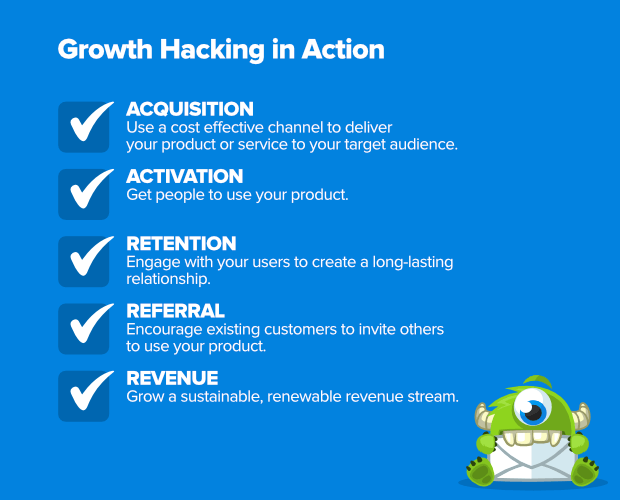
Credit: optinmonster.com
Product And User Experience
Growth hacking focuses on rapid growth and user engagement. A key part of this is the product and user experience. Enhancing these elements can skyrocket your growth. Happy users stay longer and invite others.
User Feedback
Collecting user feedback is crucial. It helps you understand what users like and dislike. Feedback can come from surveys, reviews, and direct comments.
You can use tools like Google Forms or Typeform. Analyze feedback to spot trends. Improve your product based on this data.
- Surveys
- Reviews
- Direct comments
A/b Testing
A/B testing helps you find the best version of a product. It involves comparing two versions to see which performs better.
Tools like Optimizely or Google Optimize can help. Test different elements like headlines, buttons, and images.
- Create two versions
- Test with users
- Analyze results
Data-driven decisions are key. A/B testing ensures your product is always improving.
Scaling Your Efforts
Scaling your growth hacking efforts is crucial for sustained success. As your business grows, you need efficient strategies to maintain and amplify this growth. This section delves into key techniques for scaling your efforts effectively.
Automating Processes
Automating processes can save you time and resources. This lets you focus on strategic tasks. Here are some common areas where automation can help:
- Email Marketing: Use tools like Mailchimp or HubSpot. Automate your email campaigns for better engagement.
- Social Media: Tools like Buffer or Hootsuite can schedule posts. Maintain a consistent presence without manual effort.
- Customer Support: Chatbots can handle common queries. This frees your team for more complex issues.
- Sales Funnels: Automate your sales funnels with tools like ClickFunnels. This helps in converting leads efficiently.
Automation allows you to scale your efforts without scaling your team. This boosts your overall efficiency.
Maintaining Growth
Maintaining growth requires a strategic approach. Regularly monitor your key performance indicators (KPIs). Here are some strategies:
- Data Analysis: Use tools like Google Analytics. Understand user behavior to make informed decisions.
- User Feedback: Regularly collect and analyze user feedback. This helps in improving your product or service.
- Continuous Testing: Implement A/B testing for your campaigns. This helps in optimizing your strategies.
- Content Quality: Ensure your content remains high-quality. This keeps your audience engaged.
Maintaining growth is not just about acquiring new users. It’s also about retaining them and ensuring they remain engaged.
Case Studies And Success Stories
Growth hacking techniques have become essential for startups seeking rapid growth. Learning from real-world examples provides valuable insights. Below, we explore some successful startups and the lessons learned from their growth hacking journeys.
Successful Startups
| Startup | Growth Hacking Technique | Outcome |
|---|---|---|
| Dropbox | Referral Program | Increased user base by 60% |
| Airbnb | Craigslist Integration | Boosted listings and bookings |
| Hotmail | Email Signature | Gained millions of users |
Lessons Learned
- Dropbox: Their referral program was simple but effective. Users got more space for inviting friends. This created a viral loop and increased sign-ups.
- Airbnb: Integrating with Craigslist allowed them to tap into a large audience. This tactic filled their platform with listings quickly.
- Hotmail: Adding a message in the email signature asking users to join was genius. It spread like wildfire and cost almost nothing.
These case studies show how small, smart changes can lead to huge growth. Focus on user incentives and leveraging existing platforms can drive success. Learn from these examples and apply similar strategies to grow your startup.
Frequently Asked Questions
What Is Growth Hacking?
Growth hacking is a marketing strategy focused on rapid growth. It uses innovative and low-cost techniques. It’s often employed by startups to scale quickly.
How Does Growth Hacking Work?
Growth hacking leverages data, creativity, and technology. It identifies and exploits growth opportunities. The aim is to achieve rapid and sustainable growth.
Why Is Growth Hacking Important?
Growth hacking is crucial for startups. It allows rapid scaling without a big budget. It helps achieve significant growth quickly.
What Are Common Growth Hacking Techniques?
Common techniques include viral marketing, content marketing, and SEO. Social media campaigns and A/B testing are also popular. They all aim for fast growth.
Conclusion
Mastering growth hacking techniques can transform your business. Implement these strategies to drive rapid growth. Stay agile and innovative. Monitor your results and refine your approach. Success comes from constant learning and adaptation. Embrace these tactics, and watch your business flourish.